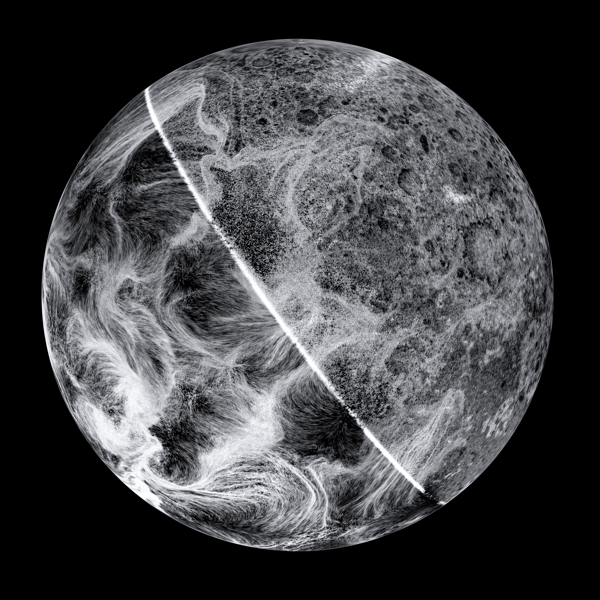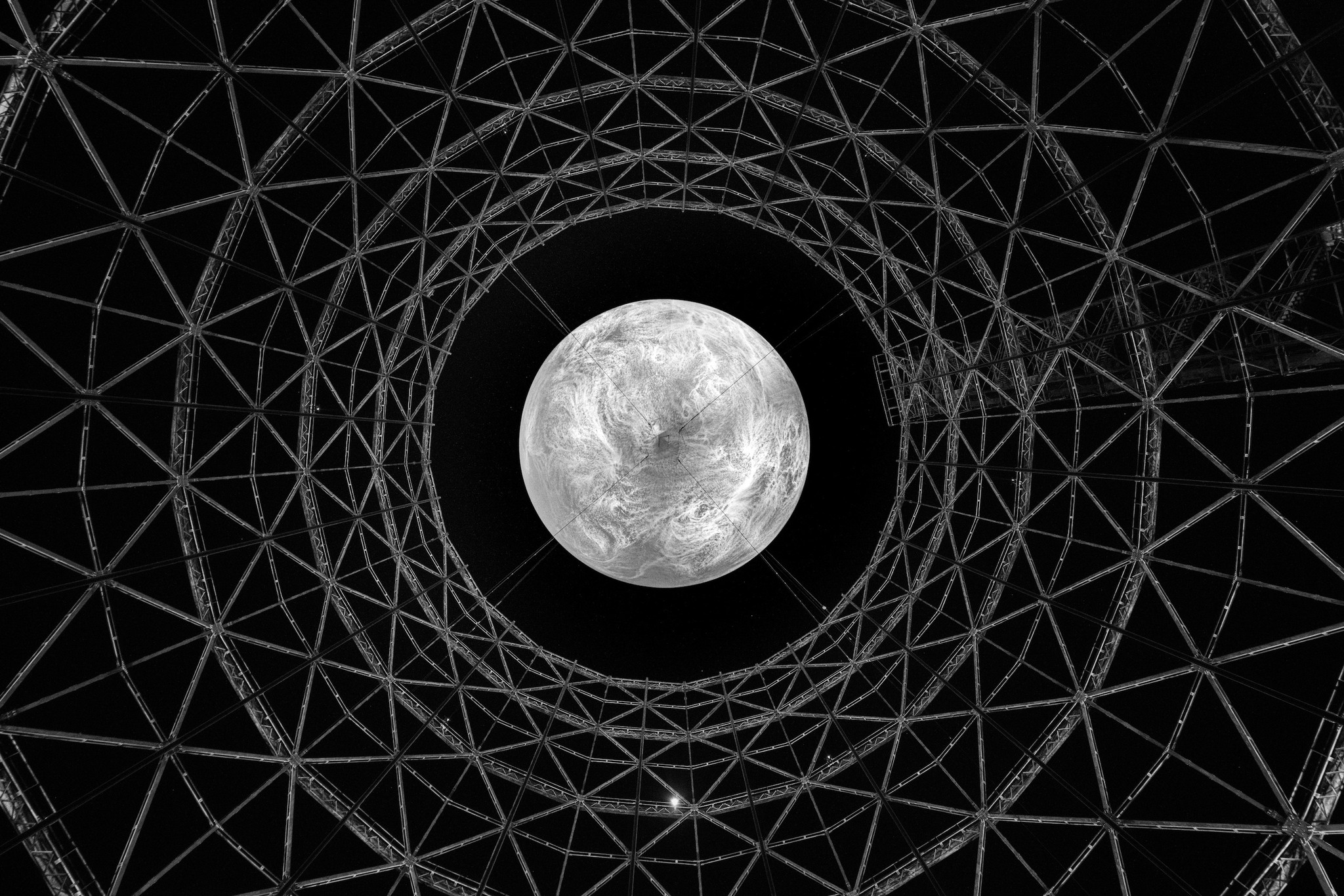
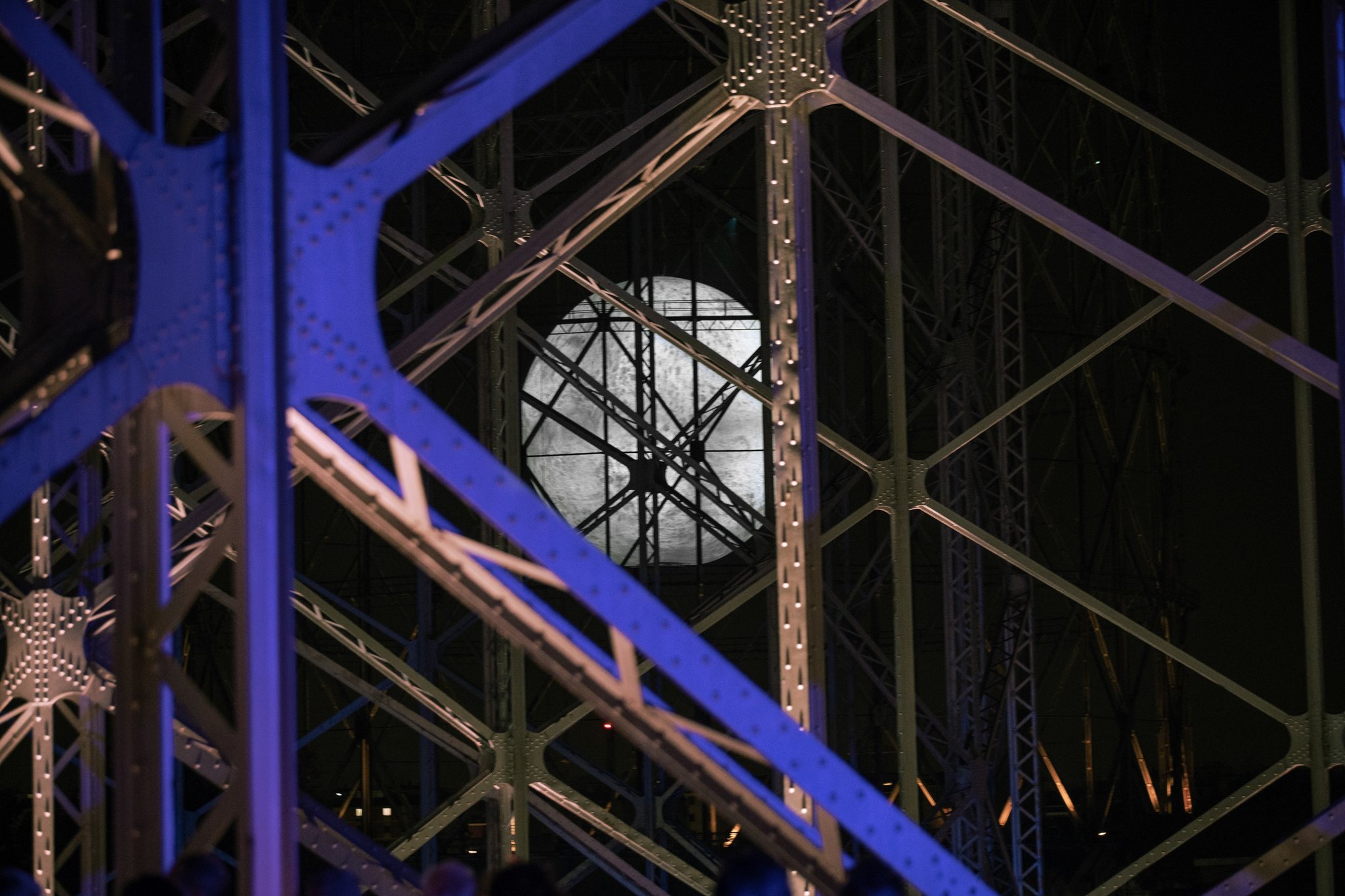
Luna Somnium is a dream-like, site-specific installation and audiovisual experience. Conceived as a large-scale, immersive piece, it features an inflated sphere with projections on all sides. This work reflects our ongoing interest in astronomy and the cosmos, but this time, we chose to explore it from a more narrative and emotional perspective, inspired by Kepler's science fiction story Somnium.
Play
Pause
Mute
Mute
Mute
Unmute
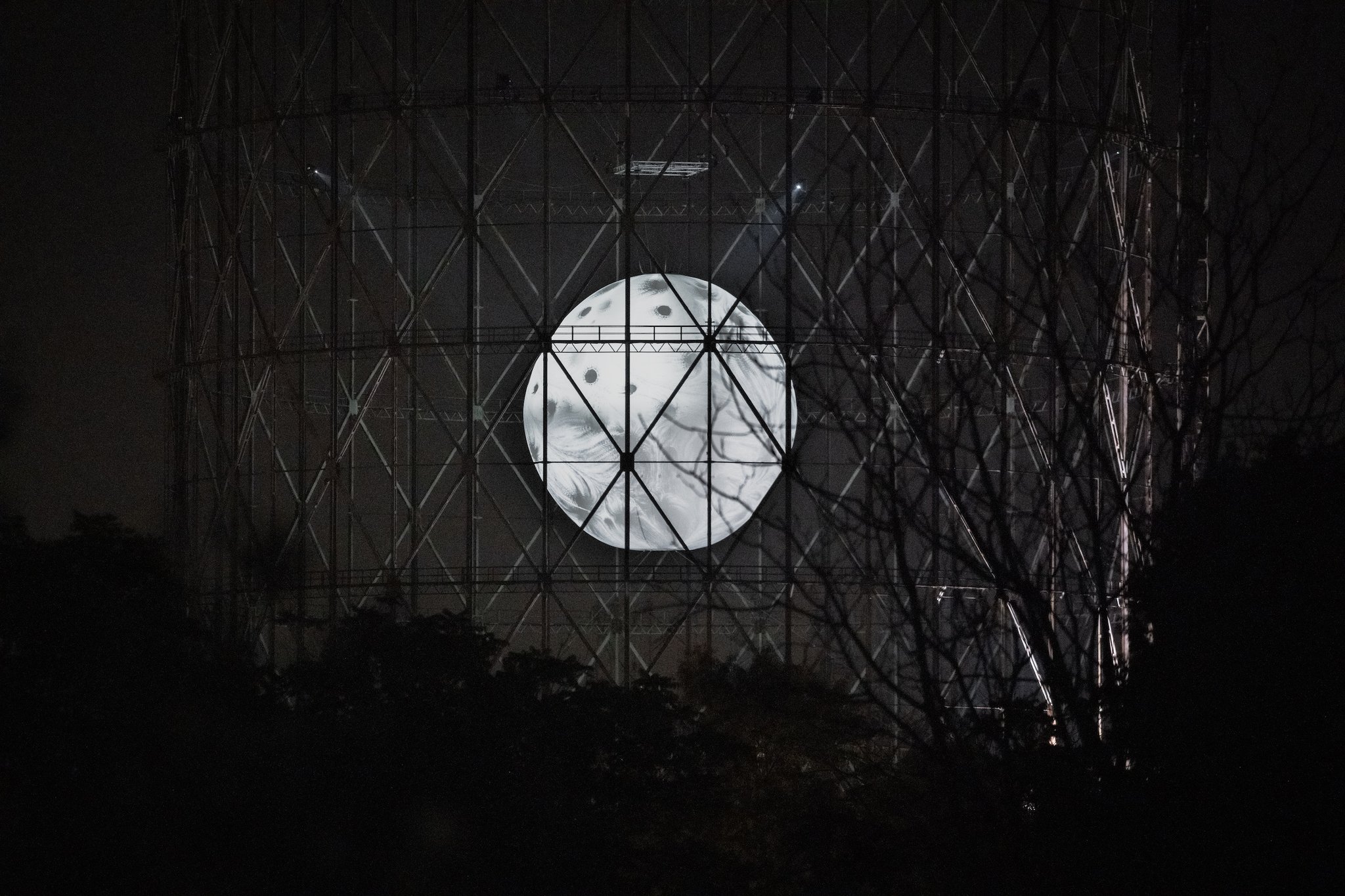
Videocittà, 2022 | ph. Emmanuele Coltellacci
Luna Somnium is a 10-minute-long experience that incorporates various narrative techniques and changes in rhythm to build emotional tension. Much like storytelling in other creative languages, like cinema or literature, the structure of the work follows a storyboard divided into different sections, each with specific visual and audio elements. This storyboard has been crucial in designing a narrative that could build up during the first section of the experience and culminate in a climax in the second part, followed by a subsequent resolution of the tension.
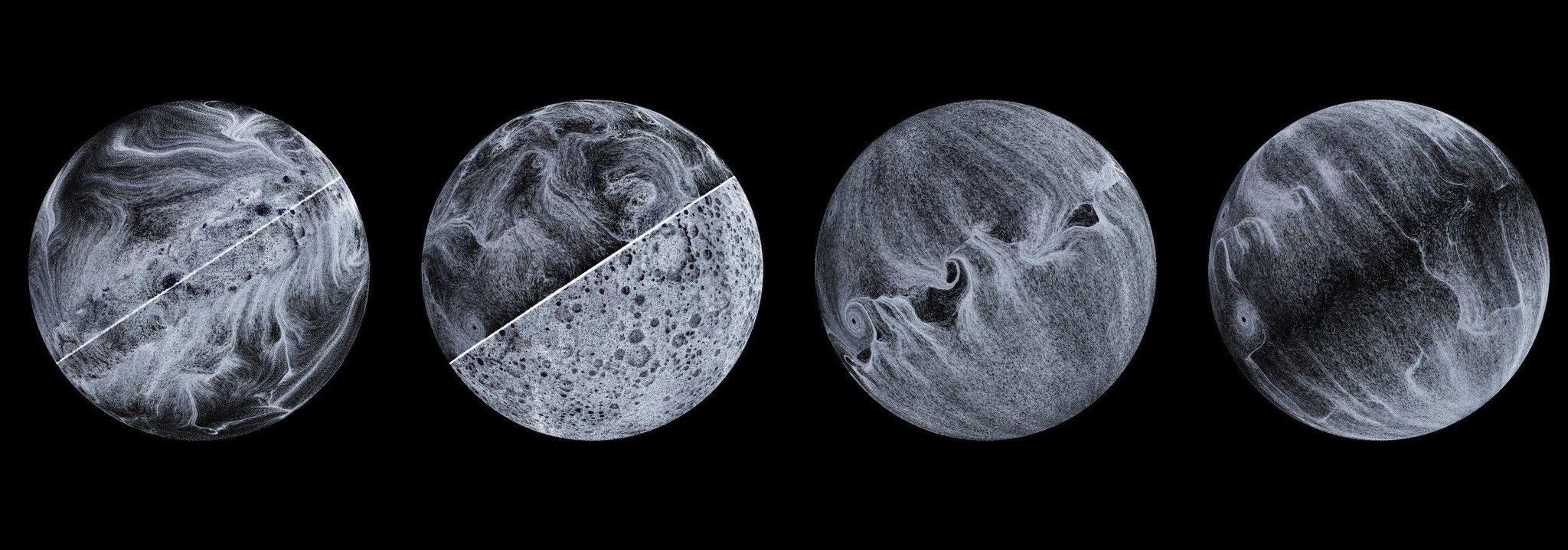
For both visuals and sound design, the initial phase involved creating a structure that could reflect and specify the sentiment of each section. As an initial inspiration, we focused our attention on the lunar phases - New Moon, Crescent, Full Moon, Waning Moon - and the satellite’s movements in relation to the Earth.
The musical composition created for Luna Somnium was the first step in the creative production process of the work. As it often happens, the audio soundtrack sets the mood and sentiment for each section of a work, guiding the visuals that follow.
The creative process saw its beginning with the collection of keywords and the creation of a Formal Drawing. Through this drawing - a visual representation of the musical thought - the entire macro form of the paper and all its micro sections were designed. This allowed for defining a narrative, dynamic emotional development, which was later referenced for the visual part as well. The formal design allows for a clearer view of one's thought and its developments: it works as a guide, a confined space where to move freely and experiment.
The research and aesthetic experimentation of timbre - a quality that allows us to distinguish sounds - focused on the recording of objects, acoustic and synthetic instruments and included: aluminium tubes, rubber balls, bass, double bass, percussion, paper. Their use was through some extended techniques - an unusual way of playing to recreate sounds - while different recording techniques, ORTF, Spaced Pair were used for recording. The purpose of this research was the need to include within the piece timbral and emotional contrasts (dark > light, empty > full, loud > delicate, rough > smooth, inharmonic > harmonic), capable of telling the variations of the lunar cycle.
The edited and catalogued recordings were then rearranged and assembled in the creative process of composing, using some writing techniques and audio manipulation through some custom patches of Max MSP.
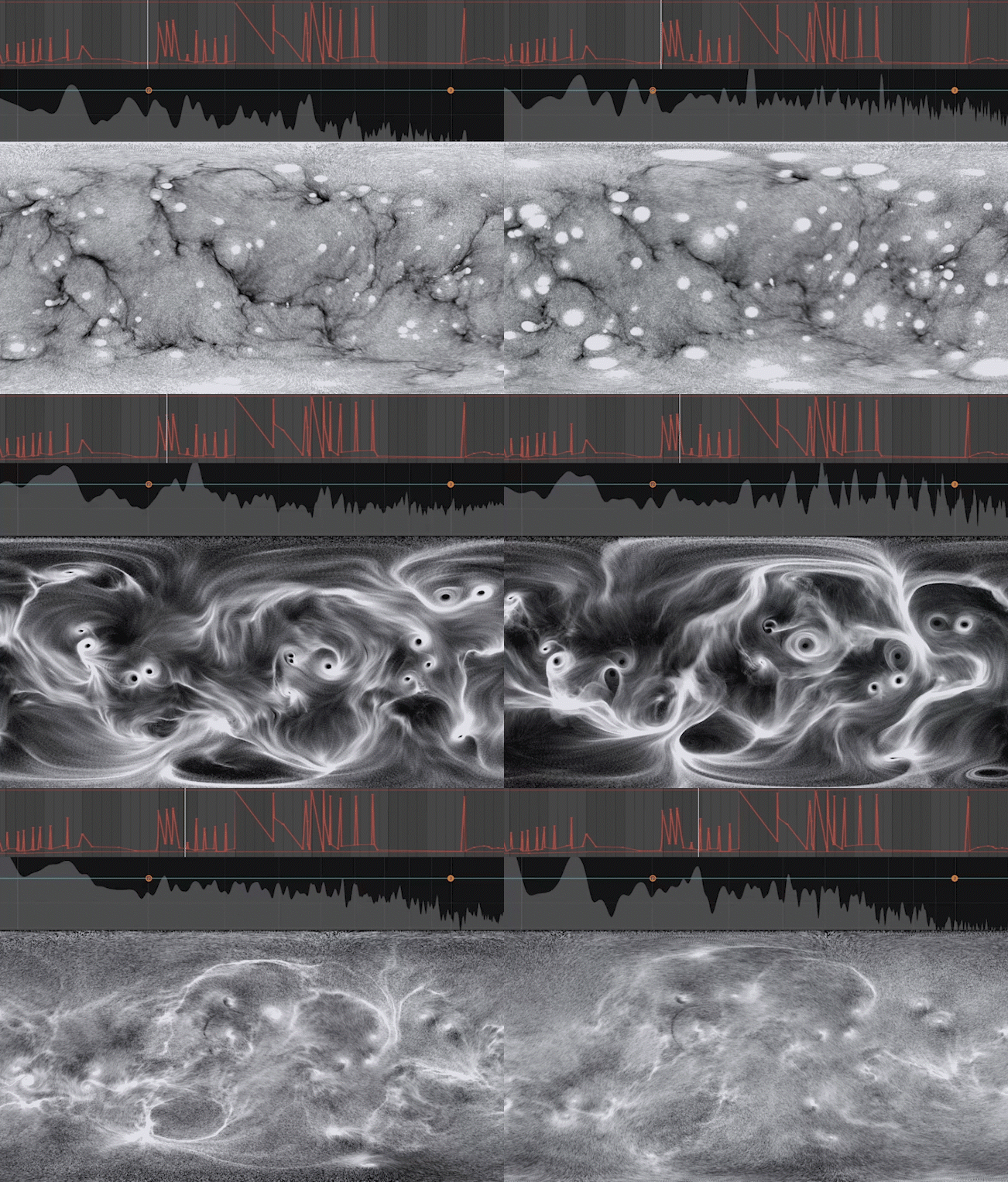
For example, the first few minutes of the piece are developed as follows: the introductory part, relaxed, rarefied, finds a canon - a contrapuntal technique that combines a melody with its imitations - at the fourth for two voices, lacking a climax and a conclusive development. The sense of bewilderment caused by the non-achievement of its end contrasts with the new scenery, charged with tension, more defined and cadential, dark, where organic and chaotic events are articulated, thickened, and then emptied and gradually left fading into the bright and relaxed central part.
In this second part, details are emphasised, letting artefacts and noises emerge from the recordings by using saturations and compressions, unconventionally pushed to the extreme.
Spatialisation - a compositional parameter of the positions of sounds in space - is an integral part of the piece and is used as a creative element in developing tensions. The mixing of all the material was done for an octophonic multichannel system (8 channels).
While the lunar phases inspired the animations, different aesthetic metaphors both reminiscent and divergent of lunar features were pursued, to include various emotional journeys. The visual production was mainly carried out through openFrameworks.
For the first part of the experience, we defined a pipeline to create and record a simulation inside openFrameworks and later used the generated frames to create a realistic rendering of surfaces inside Houdini. In particular, we took advantage of the sound reactive elements encoded in the generated frame in openFrameworks and coupled that with the ability to create more realistic rocky structures and materials in Houdini and Redshift. At the same time we mixed different shader techniques to simulate forces resembling natural phenomena, such as crack formations.
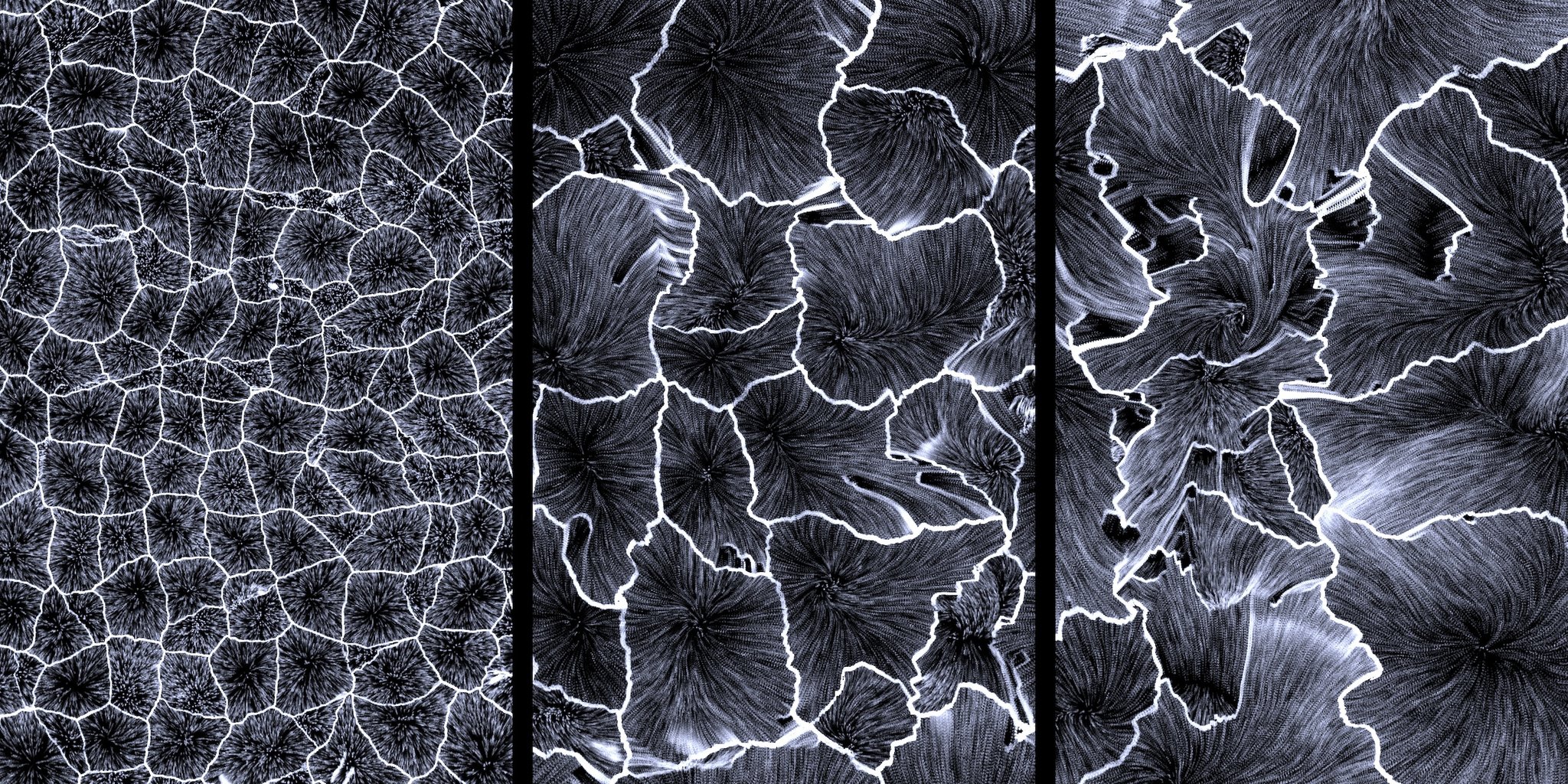
It is in the central part of the experience that the first transformation, very much like a change of state, occurs: the initial solid and rigid structures gradually lose shape and give way to smooth structures resembling liquid and organic forms. For this section, we mainly employed noise based functions to influence the behaviour of the particles by mixing different steering forces that would match both the emotional state of the experience and the audio intensity.
Subsequently, those same fluid structures further lose cohesion: the forces that hold them become frail and weak and start delineating a new landscape, underlining the point of greatest energetic thrust.

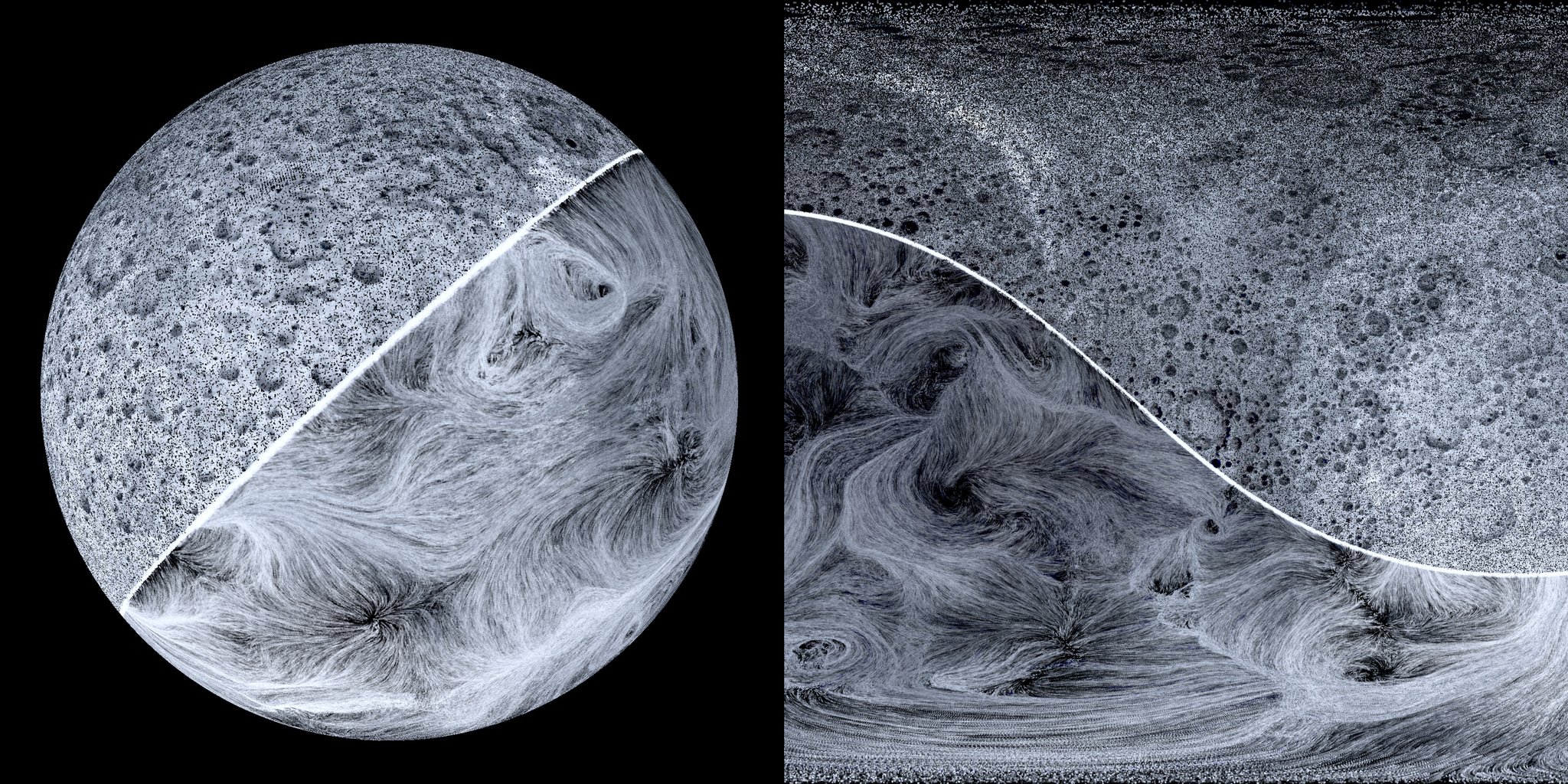
One important visual element we introduced to emphasise the stylistic transition is a scanning plane that defines the boundaries of the simulation. It becomes very much visible in two key moments, where the phase transitions become evident.
Another engaging element we employed was the introduction of attractors and repellers with different characteristics. These driving forces have proven to be particularly flexible in terms of tradeoff between efficiency and the number of variations included in the simulation.
As we developed Luna Somnium, we were faced with the challenge of translating our simulation into a 3D cartesian coordinate system: we had the necessity to project the particles onto a spherical surface in order to draw the final texture as an equirectangular map (then used for the actual projection on the video server). Alternative solutions for the simulation space were tested during the development phase of the project, either a spherical coordinate system or a 2D particle simulation with latitude distortion.
Videocittà, 2022 | ph. Cosimo Trimboli
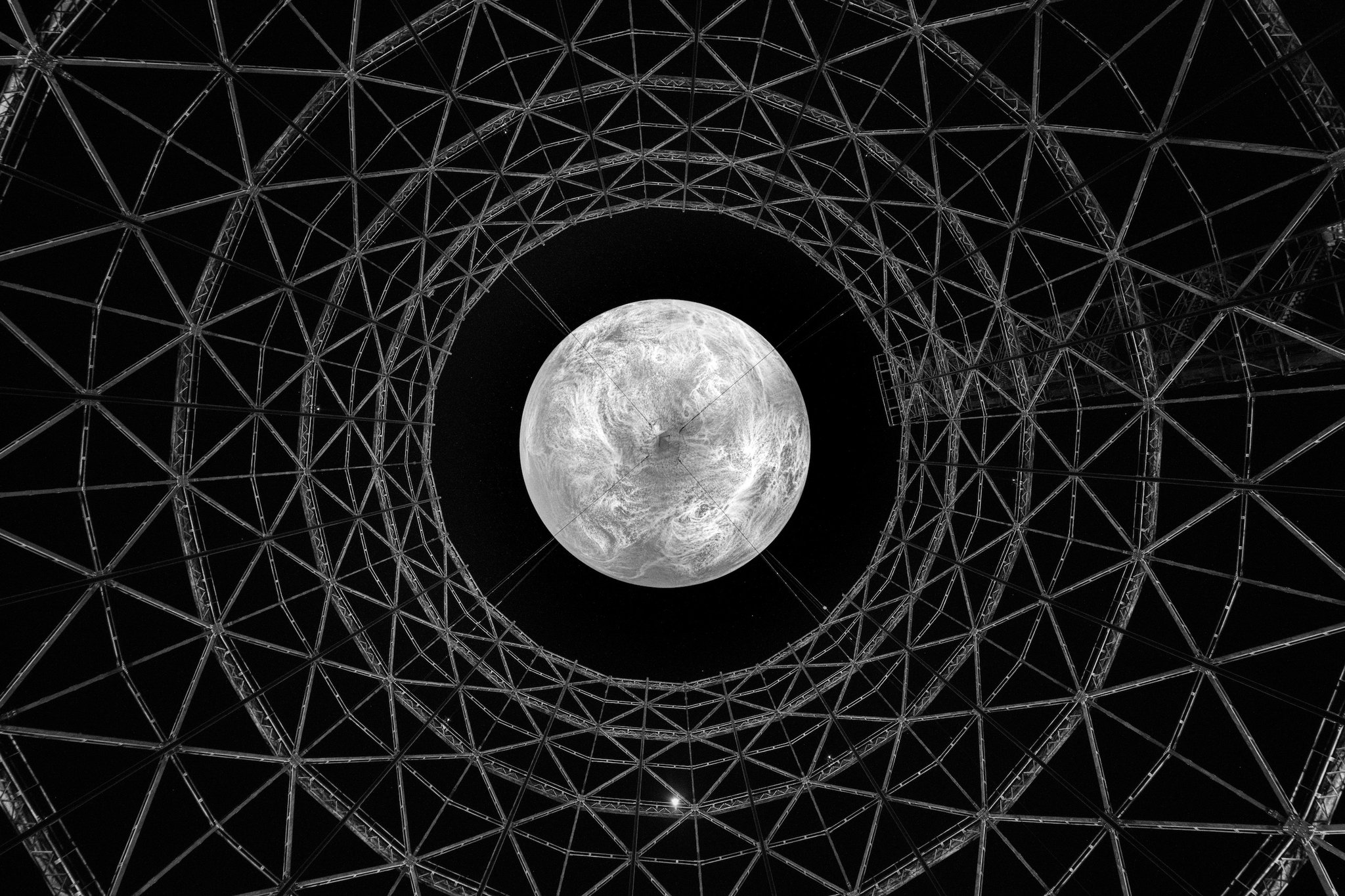
Videocittà, 2022 | ph. Emmanuele Coltellacci
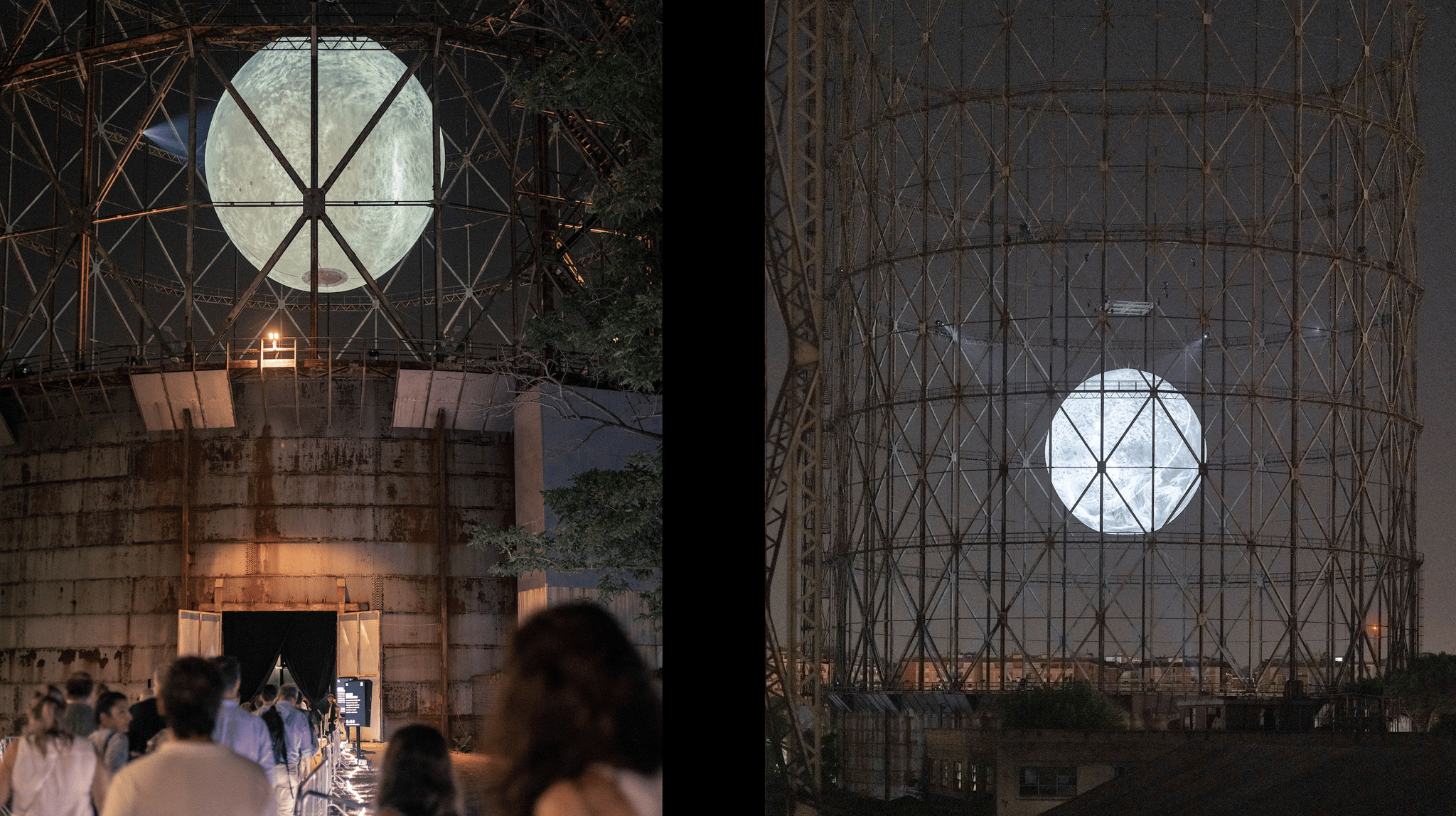
Videocittà, 2022 | ph. Cosimo Trimboli & Emmanuele Coltellacci
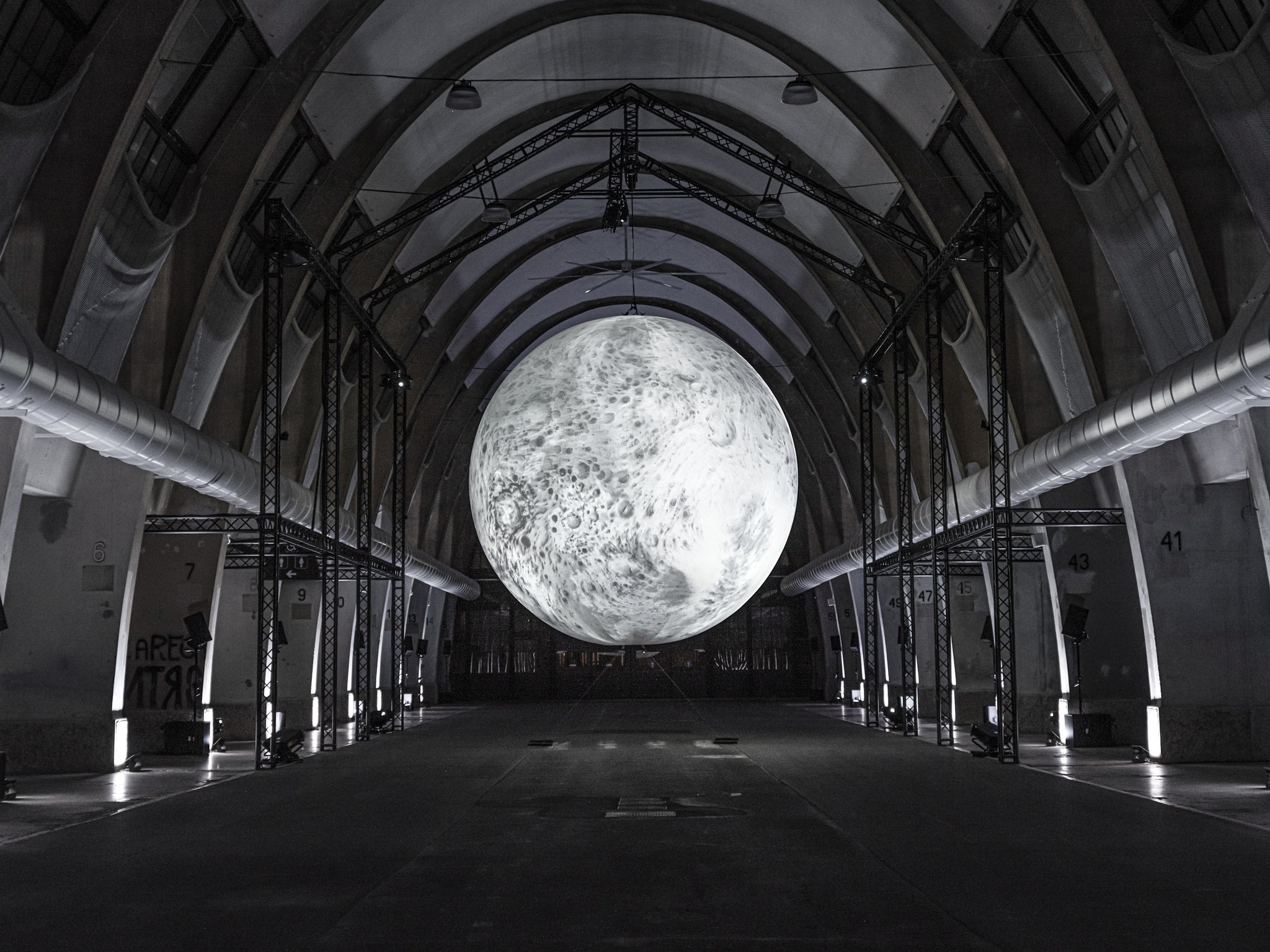
Gallerie Mercatali, 2023
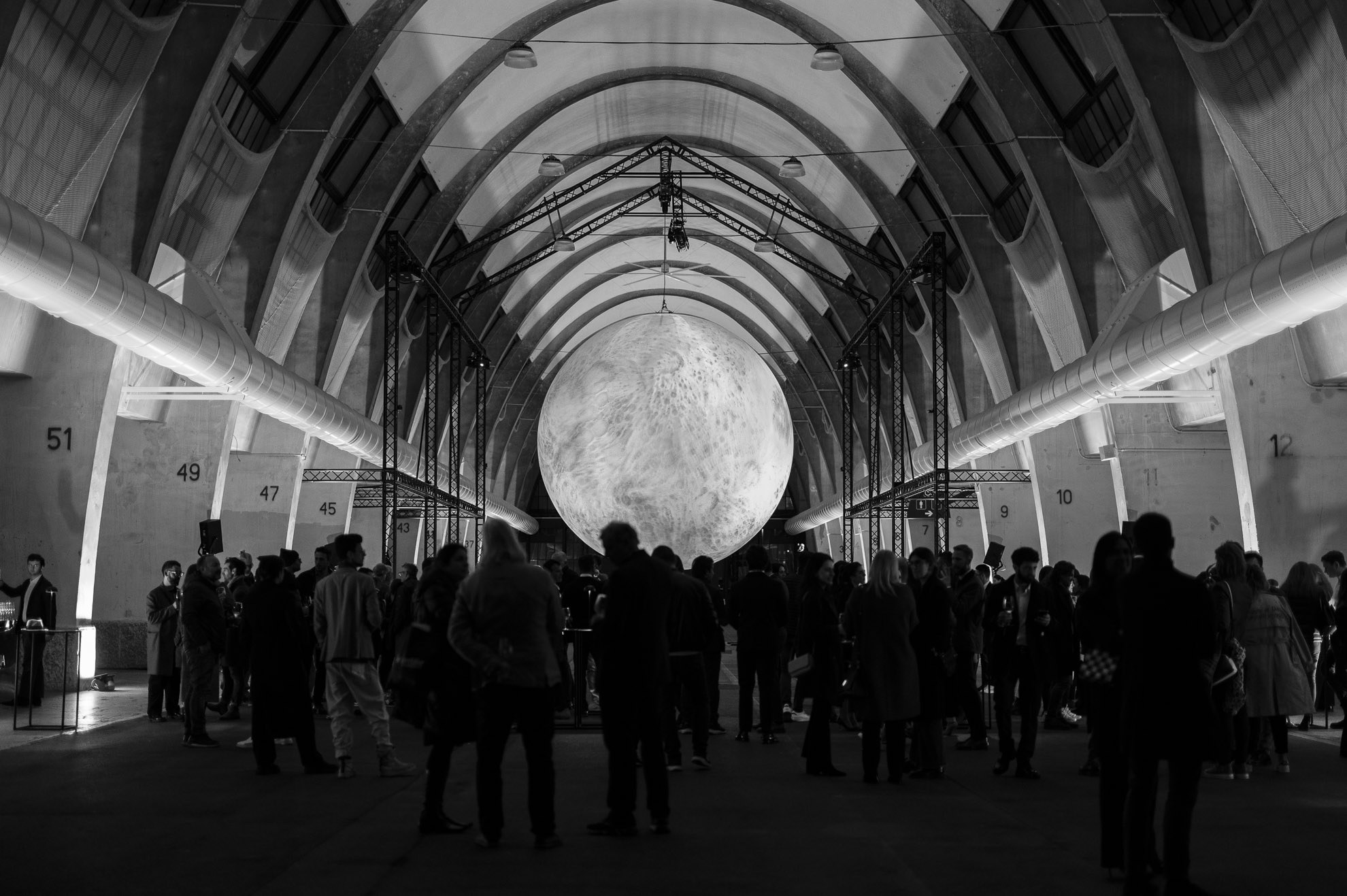
Gallerie Mercatali, 2023
Luna Somnium is an artwork by fuse*
Art Direction: Mattia Carretti, Luca Camellini
Concept: Mattia Carretti, Luca Camellini, Samuel Pietri, Riccardo Bazzoni
Software Artists: Luca Camellini, Samuel Pietri, Riccardo Bazzoni, Giovanni Checchia
Sound Design: Riccardo Bazzoni
Gallerie Mercatali, Verona (IT)
Videocittà, Rome (IT)