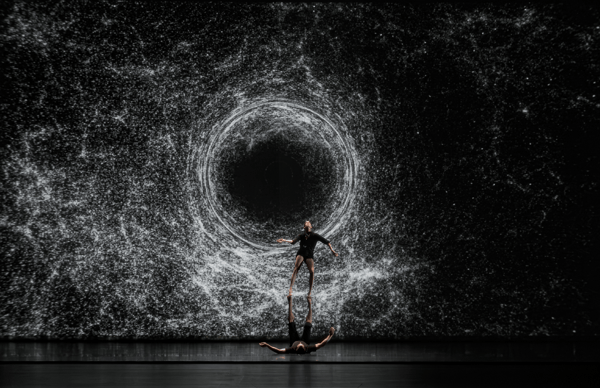
Sál (“soul”) is a live media opera exploring the universal concept of impermanence, emphasizing the ever-changing essence of life.
As the final chapter of a trilogy, Sál builds upon the narrative threads established in the two previous live performances, Ljós (2014) and Dökk (2017). Ljós (“light”) explores the theme of birth, “coming into the light”, while Dökk (“darkness”) delves into the concept of interdependence, revealing how each element is inevitably connected to the others in a dynamic balance. In Sál, the focus shifts to the horizon, to the boundary of human life, embracing the notion that everything is in a state of constant transformation, that everything is impermanent.
Sál explores this fleeting threshold between one state and another, examining the intricate emotional dynamics that unfold in these moments of uncertainty and instability. The piece invites a deep contemplation of life’s inherent entropy, encouraging the audience to surrender to the precious fragility of life.
Play
Pause
Mute
Mute
Mute
Unmute
Everything is in constant change; nothing is permanent. Each moment is born and, in dying, clears the way for the next. Every sound arrives and then fades away, everything vanishes before our eyes. Visions, flavors, sounds, physical touch, relationships - all share the same nature: impermanent, fleeting, ephemeral. Nature shows us how everything that exists, from the microscopic to the cosmic scale, is in a state of constant transformation. Observing a cell under a microscope, we can see that even the smallest particles exist in a continuous flow, living and dying moment by moment.
The same dynamic can be observed in our universe: impermanence governs galaxies, stars, and black holes. At every moment, something fades away, and something else explodes into existence. Just like us, stars and galaxies are born, live for a time, and then die.
In our human experience, it is precisely when we confront death that we come into undeniable contact with the idea that nothing is permanent.
Those who provide end-of-life care, or who have experienced accompanying someone in their final moments, bear witness to this. Accompaniment is an intimate and personal encounter with the unknown; it is an act of presence and support.
To accompany someone, one must be willing to confront their own pain in order to truly connect with the pain of others. These principles, described in Frank Ostaseski’s book The Five Invitations, have inspired the narrative structure of Sál, particularly the relationship between the two performers.
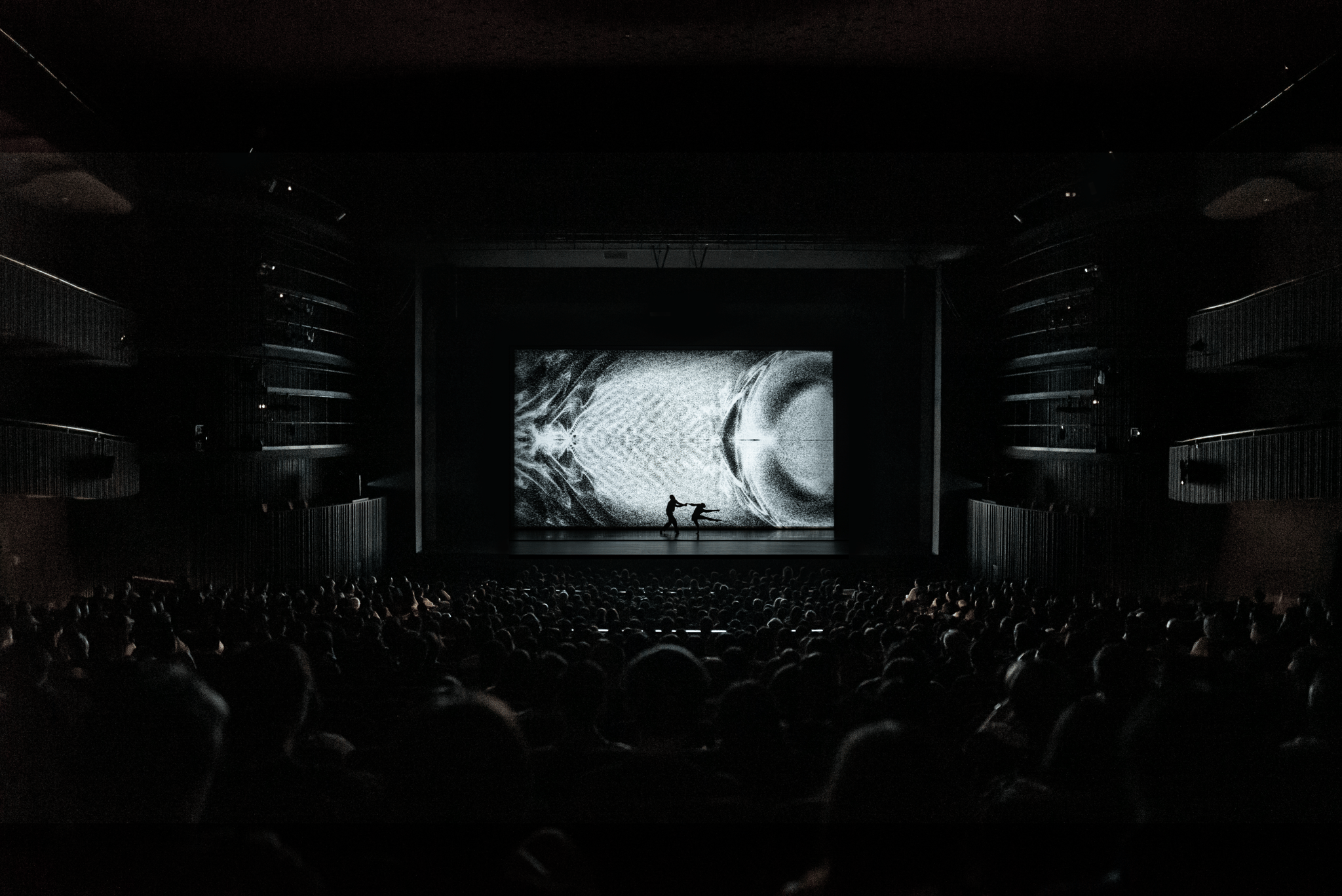
National Taichung Theatre, 2025 | ph. Matteo Torsani
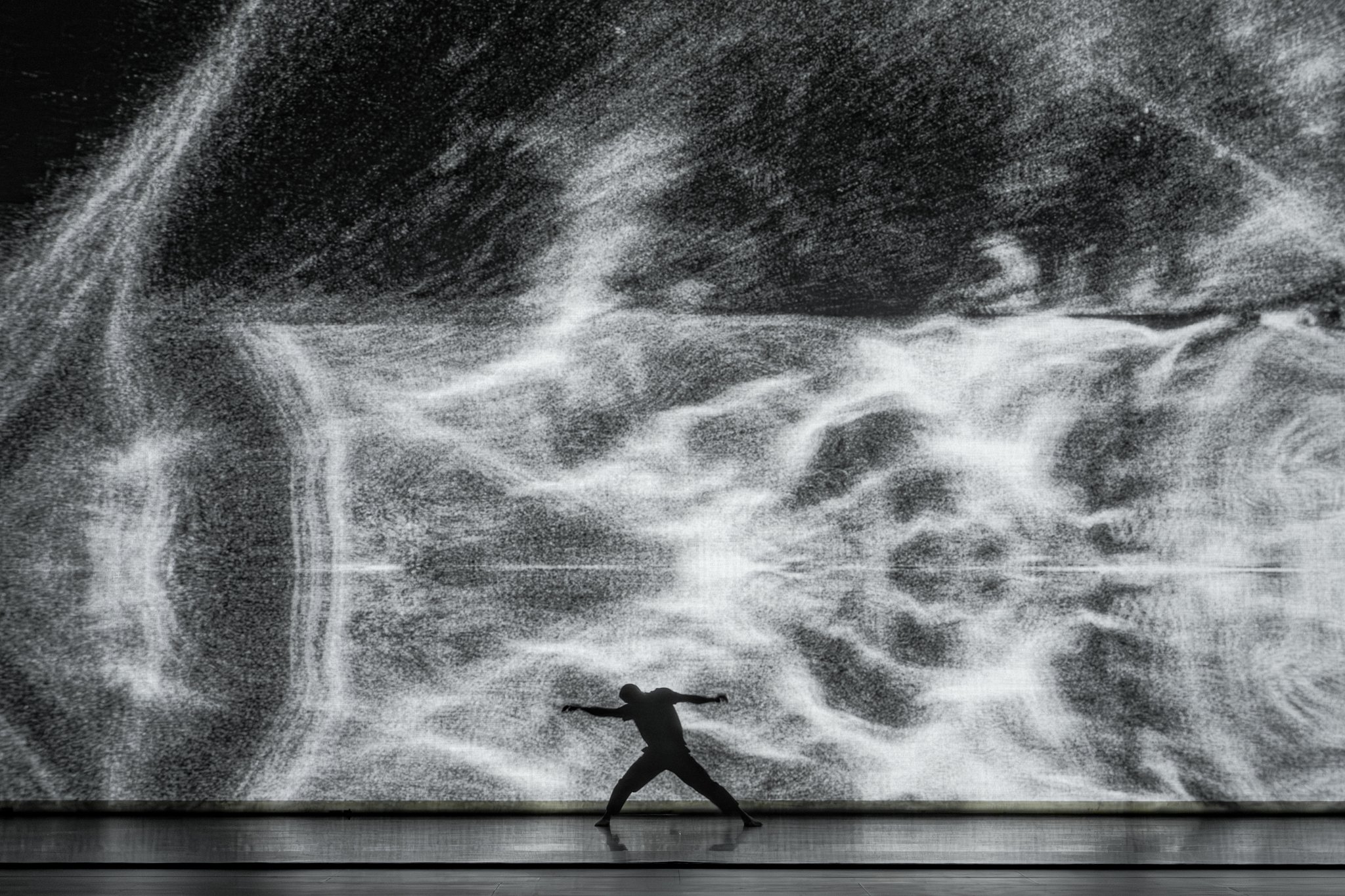
In Sál, the dancers move through an unstable space that reflects the tension between past and future, opening themselves to vulnerability and embracing every aspect of the human experience.
Impermanence compels us to face the unknown and the sense of mystery: the fear and wonder we experience when encountering something beyond our full comprehension. To represent this, the visual narrative of Sál focuses on observing what happens to light and matter in the vicinity of black holes through a series of simulations developed in collaboration with the University of KU Leuven and Toronto University.
Black holes, with their extreme gravitational fields, challenge both quantum mechanics and general relativity, leading to profound questions about the nature of time itself. Approaching the event horizon means approaching a boundary beyond which nothing can escape - not even light. This boundary separates the known from the unknown, the tangible from the mysterious.
Ultimately, Sál invites us to embrace the instability of our lives and the vertigo we feel when faced with the inevitable dissolution of familiar forms. These moments of uncertainty and disorientation often become opportunities to rediscover kindness and compassion, reconnecting deeply with our human nature, with our soul. Sál.
Both Ljós and Dökk are deeply characterized by aesthetic elements inspired by the study of the physical properties of celestial matter. In Sál, our research has been guided by the exploration of General Relativity, focusing on one of the most fascinating cosmic entities that embody its fundamental principles: black holes.
Black holes are at the heart of many contemporary scientific investigations because they represent extreme environments where the laws of physics, particularly general relativity and quantum mechanics, intersect in complex and often unresolved ways. In Sál, the visual development of the performance is centered around an exploration of what happens to light and matter near black holes - regions where nature reveals itself in its most extreme form. In these areas, gravity is so intense that it bends space and time, seemingly distorting the path of light itself.
Play
Pause
Mute
Mute
Mute
Unmute
By observing the phenomena surrounding black holes, we come to grasp the relativity of time, and it is this very relationship that links to the concept of impermanence. Approaching the edge of the event horizon and witnessing the distortions of space and time in these regions serves as a powerful metaphor - one that evokes both awe and a sense of profound uncertainty. At the very boundary of human understanding, we encounter something that both terrifies and inspires us.
The visual experience developed for Sál is based on advanced simulations, the result of two years of research conducted in collaboration with Professors Daniel R. Mayerson and Fabio Bacchini from KU Leuven University in Belgium, and Bart Ripperda, Associate Professor of Theoretical Astrophysics at the Canadian Institute for Theoretical Astrophysics, University of Toronto.
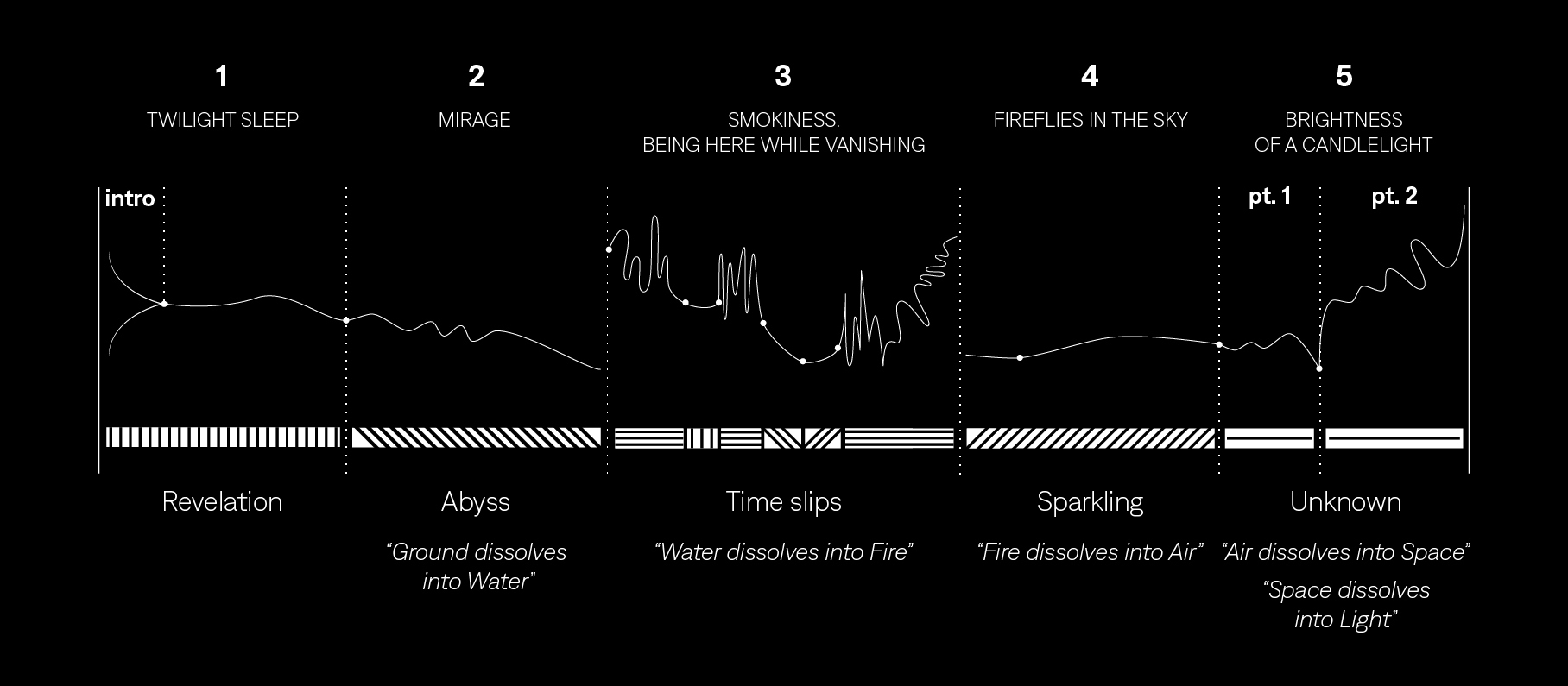
Sál unfolds across five chapters, each defined by visual elements and scientific simulations exploring phenomena related to the behavior of light and matter around a black hole. The progression of scenes is inspired by the process of elemental dissolution, drawing from diverse traditions - from ancient Greece to major Eastern philosophies - that conceive life as composed of four or more fundamental elements: earth, water, fire, and air. The Zohar, a 13th-century Jewish mystical text, established these four elements as the foundation of all phenomena, including the human body. Other traditions, such as Indian thought and Chinese philosophy, similarly describe five or six fundamental elements. Buddhism, in particular, emphasizes that each element is not a static entity but a continuously shifting process, describing how the elements that make up the body dissolve at the moment of death. Each element carries both physical and mental qualities: the solidity and softness of earth, the fluidity and cohesion of water, the radiance and warmth of fire, and the stillness and motion of air.
The process of dissolution, then, is not limited to the body but also extends to the mind: the fundamental elements are emotional states and mental functions, creative processes and lingering traces of the past. It is a way to understand and come to terms with the fact that, in the process of dying, we release our fixed identities - letting go of the physical elements of the body, our thoughts, perceptions, sensations, and conditioning.
Play
Pause
Mute
Mute
Mute
Unmute
1. Revelation - Twilight Sleep
The journey begins in a liminal state between wakefulness and sleep, where boundaries dissolve and the theme of accompaniment emerges. To stand beside someone in transition evokes uncertainty, fear, and vulnerability, as both the one accompanying and the one being accompanied struggle between holding on and letting go. When defenses give way, deeper emotions surface, demanding surrender. As resistance dissolves, instability transforms into acceptance, and the path begins to reveal itself.
In this section, the visual environment is created using FOORT, a software designed to visualize the gravitational lensing effect on matter surrounding a black hole. While FOORT is traditionally used to simulate light emissions from a black hole, in this case, it has been adapted to highlight the gravitational distortion of objects positioned behind it. This adaptation allows for a visual exploration of how the immense gravitational forces of the black hole warp the surrounding space.
The universe emerging in the background was generated using the EAGLE simulation - the same one employed for the final scenes of Dökk, establishing a narrative continuity between the two chapters of the trilogy.
Play
Pause
Mute
Mute
Mute
Unmute
2. Abyss - Ground dissolves into Water
In the second chapter, the solid foundations of body and mind begin to crumble. Control, strength, and clarity dissolve, giving way to a sensation of lightness, disorientation, and fear - like sinking into the depths of an ocean. At first, resistance intensifies the struggle, but true transition only occurs when one surrenders to the flow and relinquishes control.
The imagery draws inspiration from plasma dynamics, particularly its fluid movements and the forces generated by interactions with magnetic fields. Plasma, an electrically conductive gas, behaves differently from ordinary fluids as it generates electromagnetic fields that influence its motion. This phenomenon, known as magnetohydrodynamics (MHD), is fundamental in the study of plasma, especially in astrophysical contexts such as black holes.
Simulations using BHAC reveal that plasma behavior changes drastically when its electromagnetic properties are considered. MHD exposes the powerful forces governing plasma, such as the formation of relativistic jets that emanate from black hole poles, traveling at nearly the speed of light. These forces, combined with plasma’s fluid nature, form the visual and conceptual foundation of the second section of Sál, exploring the intricate relationship between plasma and magnetic fields in astrophysical events. The simulations employed are based on BHAC, using the specific initial conditions of FMTorus, a hydrodynamic equilibrium solution developed by Fishbone & Moncrief (1976).
Play
Pause
Mute
Mute
Mute
Unmute
3. Time slips - Water dissolves into Fire
This section marks the transition from fluidity to fire, where intense emotions erupt - love, rage, passion, pain. Suspended between past and future, the mind oscillates between nostalgia and anticipation, seeking stillness within chaos. It is like dancing in a storm, balancing on the fragile edge between control and surrender. At the heart of movement, a paradox emerges: without stillness, dance would not exist, and yet, there is only dance.
Here, the focus shifts to the extreme dynamics at the edge of a black hole, particularly the phenomenon of magnetic reconnection. This process occurs when magnetic fields collide, ejecting matter in opposite directions. fuse* has drawn from this concept to explore plasma behavior, highlighting its similarities to fluid dynamics observed in other systems and expanding our understanding of its role in astrophysical events. These phenomena have been simulated using BHAC with the "Harris current sheet" configuration, an equilibrium solution to the Maxwell-Vlasov equations.
Play
Pause
Mute
Mute
Mute
Unmute
4. Sparkling - Fire dissolves into Air
When the fire subsides in the fourth chapter, it makes way for air. Struggle and turmoil dissolve, leaving only the rhythm of breath - a fragile yet persistent presence. Time flows without weight, revealing the impermanence of existence. In this state of transcendence, thoughts drift like wind, unanchored yet at peace.
A radical transformation becomes evident: simulations, once guided by clear and scientifically precise patterns, are distorted and disrupted. This shift not only breaks controlled structures but also serves as a powerful metaphor for impermanence. What seems structured and predictable can dissolve in moments of crisis, mirroring the fragility and unpredictability of life itself.
This section continues to use the same simulation as the previous one.
Play
Pause
Mute
Mute
Mute
Unmute
5. Unknown - Air dissolves into Space / Space dissolves into Light.
The fifth chapter begins in silence, with breath as the only rhythm. A storm of wind and light rises, roles dissolve, identities intertwine until everything is swept away in one final breath. At the threshold, on the horizon, past and future fade. Only the present remains. Suspended in stillness, a warm glow emerges - a silent presence.
The one who once led is now the one being guided.
The end dissolves into a new beginning.
This chapter employs a global simulation based on the Fishbone & Moncrief torus, a ring-like structure surrounding a black hole. Here, plasma density is visualized through magnetohydrodynamic (MHD) data processed with the BHAC tool. The initial configuration takes the shape of a torus, where the color of the particles indicates plasma density. The three-dimensional view of this simulation allows for an exploration of the structure’s complexity and its interaction with the surrounding environment.
In this final section, the visualization is further enriched by integrating multiple tools and simulations. FOORT, used for gravitational lensing effects, is combined with a 3D representation that enhances depth and complexity. Additionally, RAPTOR - a software designed to simulate radiative transfer - analyzes the path of photons, their wavelength, and the amount of plasma they pass through. This combination allows for the observation of how light interacts with the plasma around the black hole, revealing the intricate relationships between matter, light, and gravity. As the point of observation moves closer to the black hole, rings of light formed by photons trapped in unstable orbits emerge, offering a powerful visual representation of the extreme gravitational forces at play.
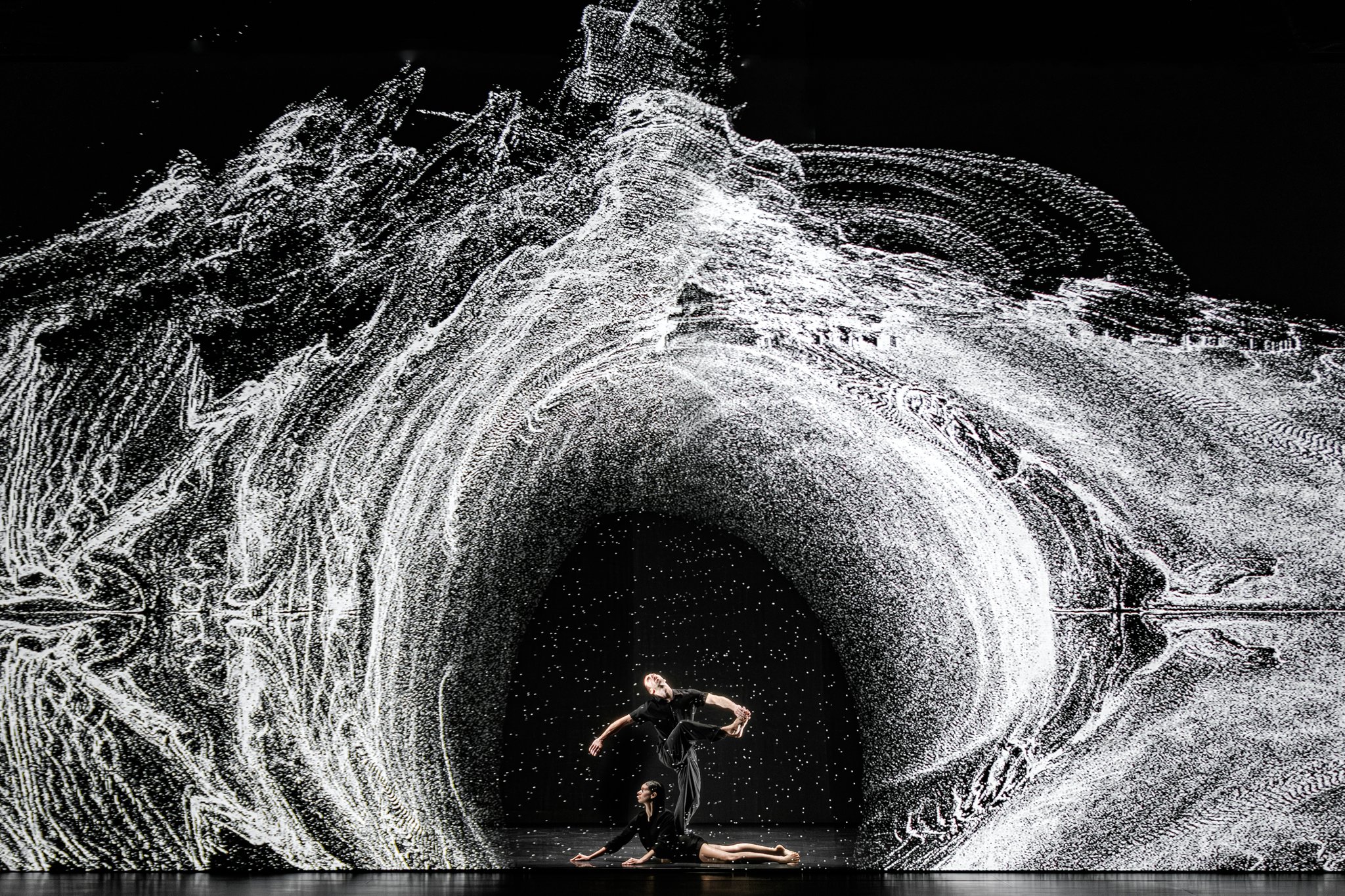
National Taichung Theatre, 2025 | ph. Matteo Torsani
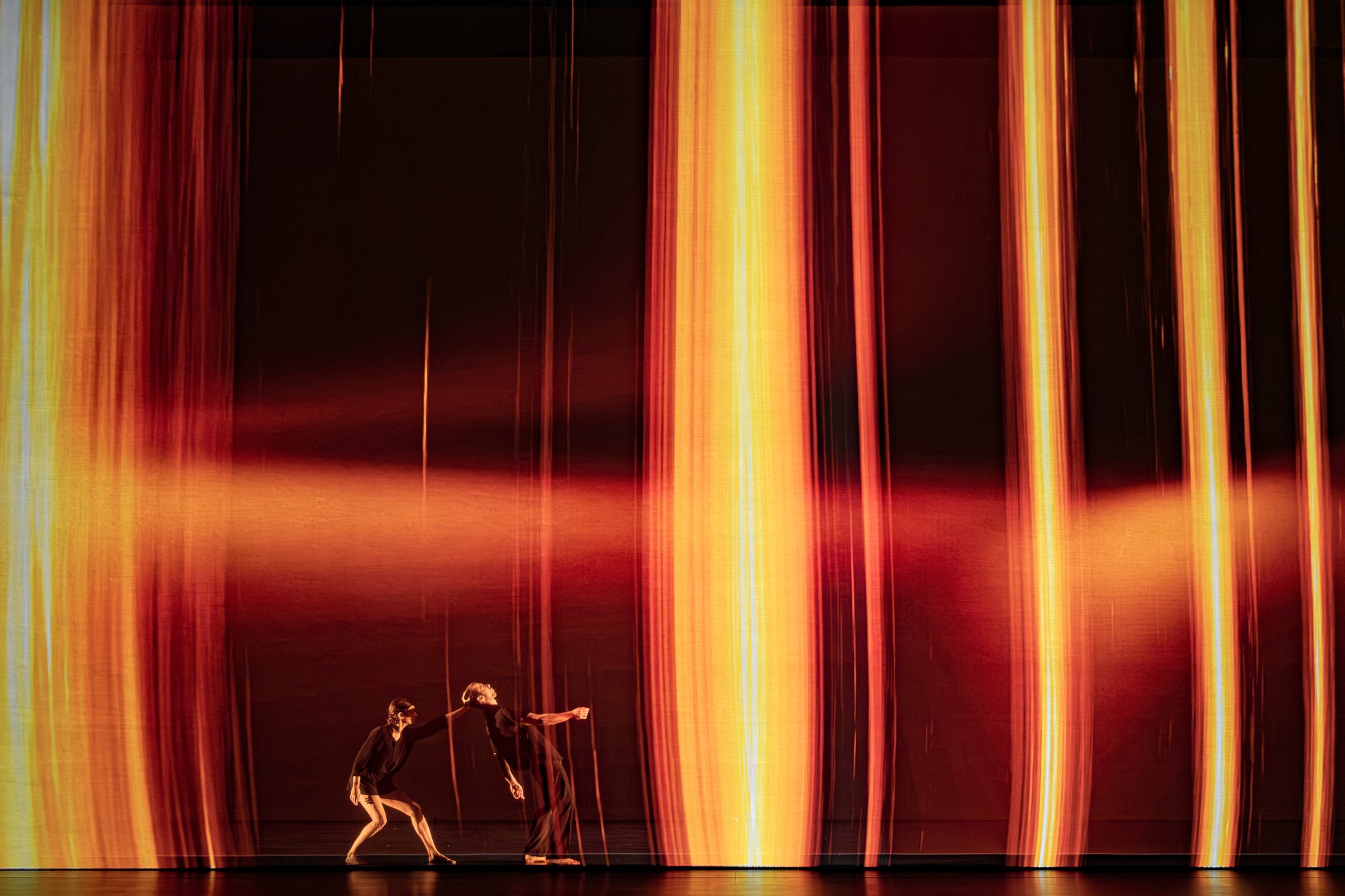
National Taichung Theatre, 2025 | ph. Matteo Torsani
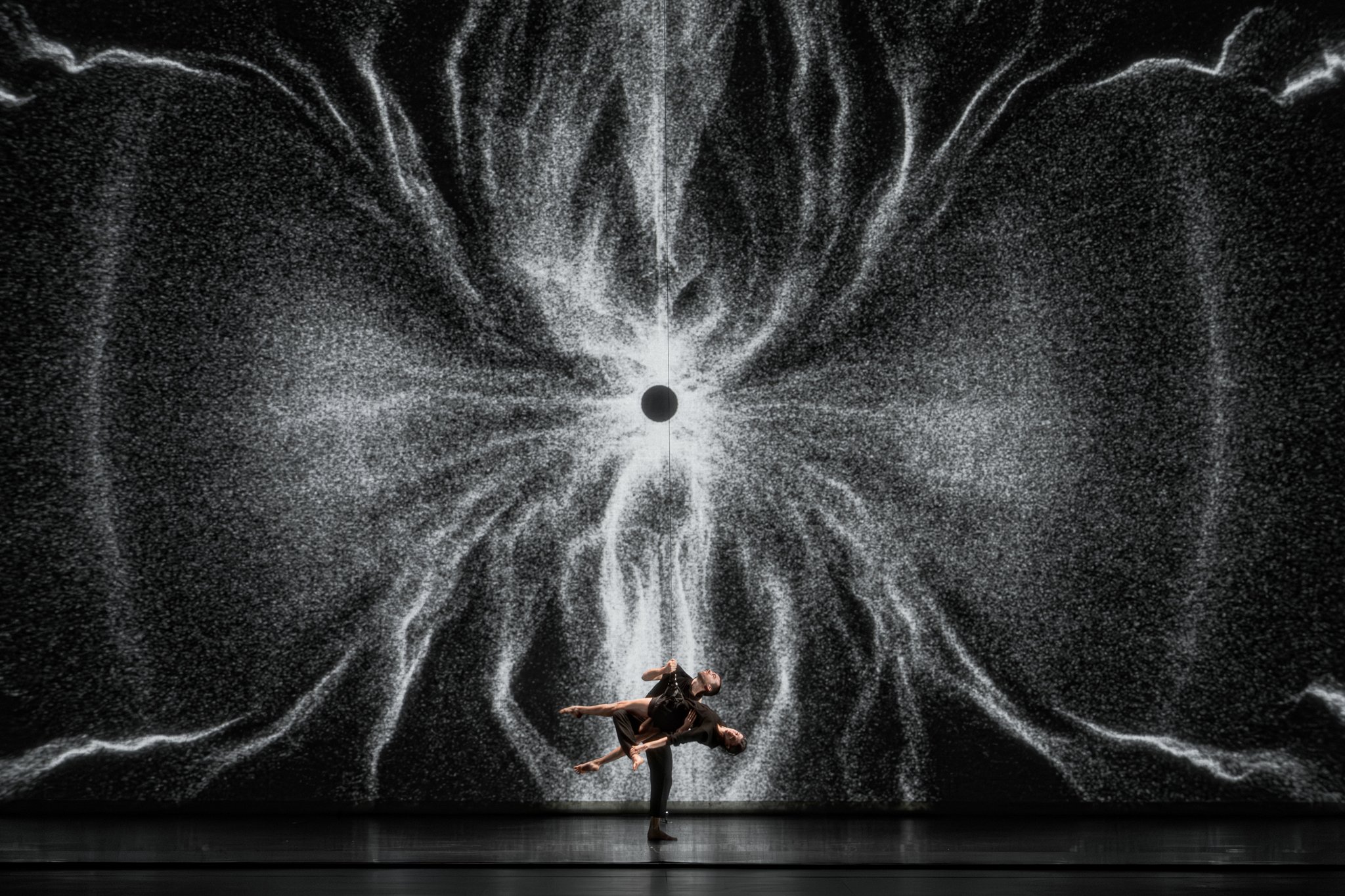
National Taichung Theatre, 2025 | ph. Matteo Torsani
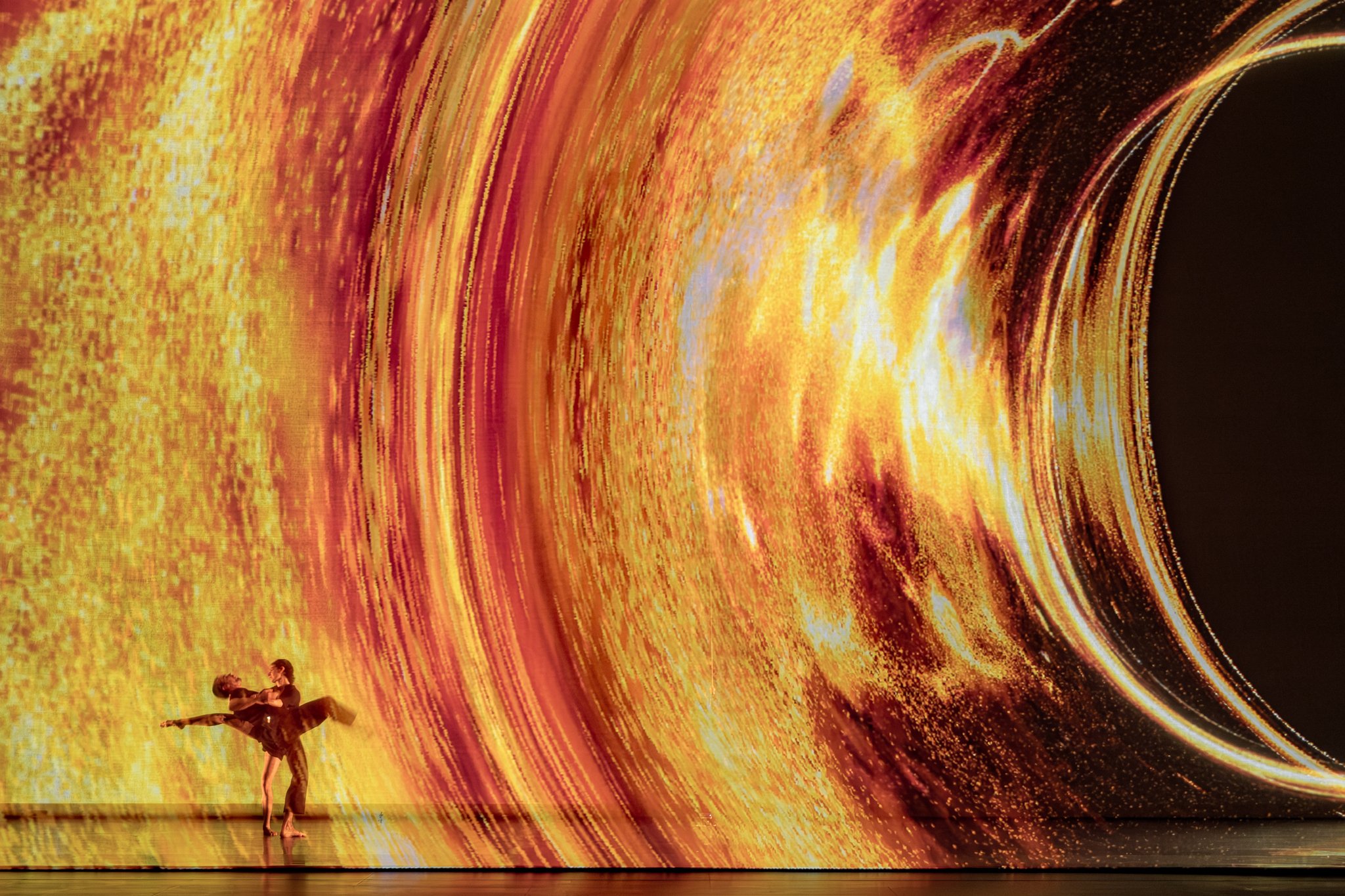
National Taichung Theatre, 2025 | ph. Matteo Torsani
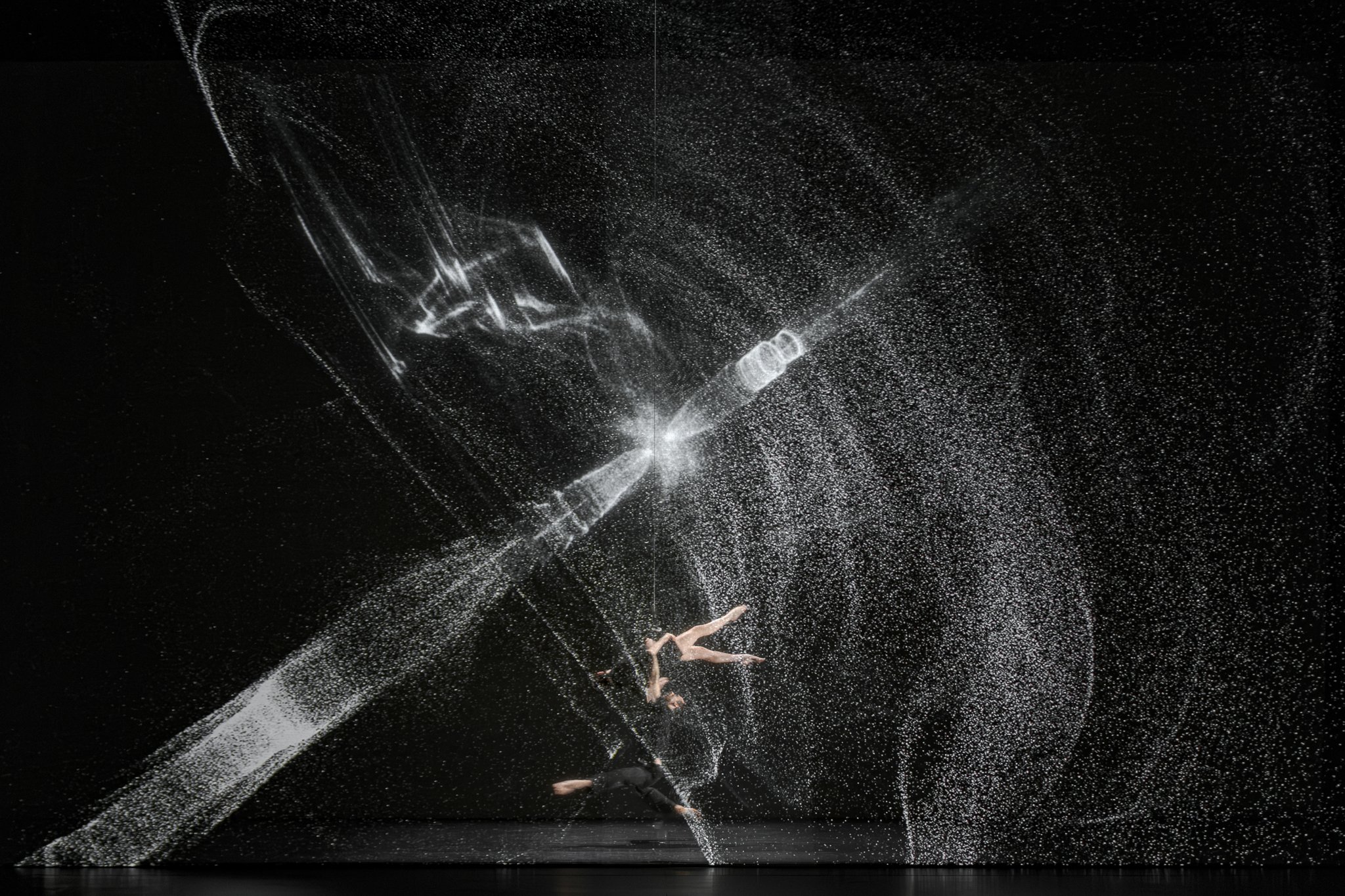
National Taichung Theatre, 2025 | ph. Matteo Torsani
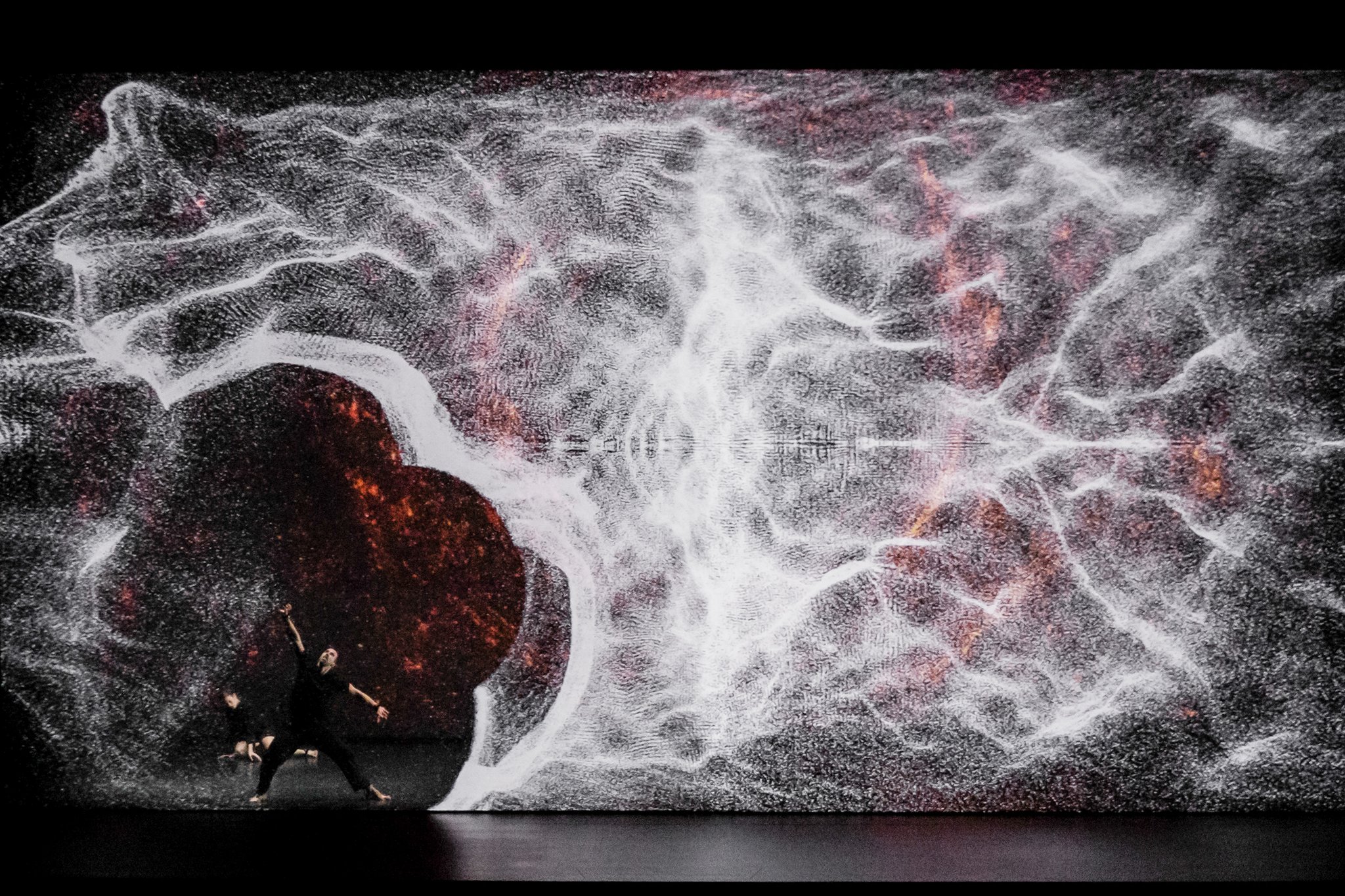
National Taichung Theatre, 2025
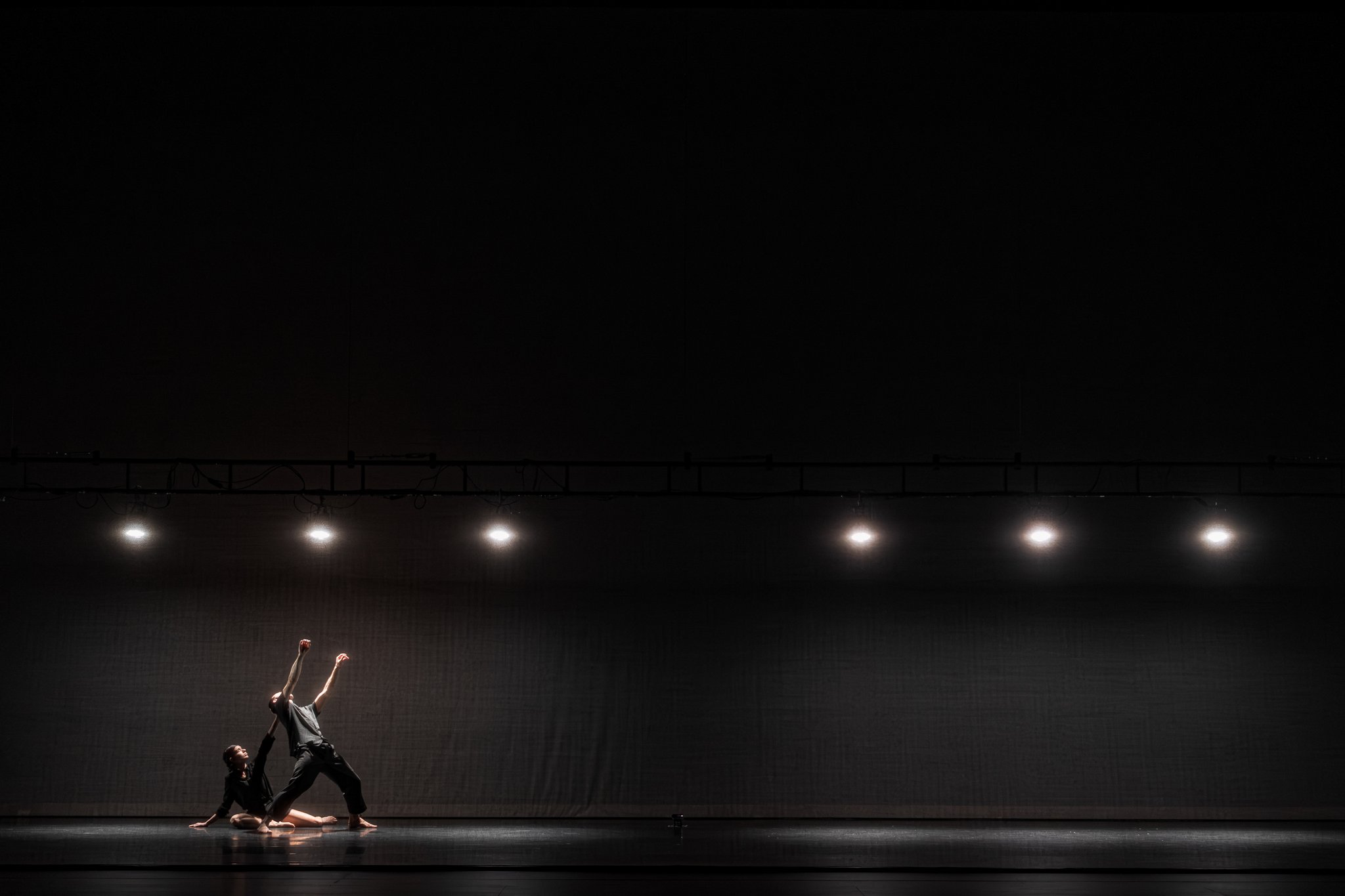
National Taichung Theatre, 2025 | ph. Matteo Torsani
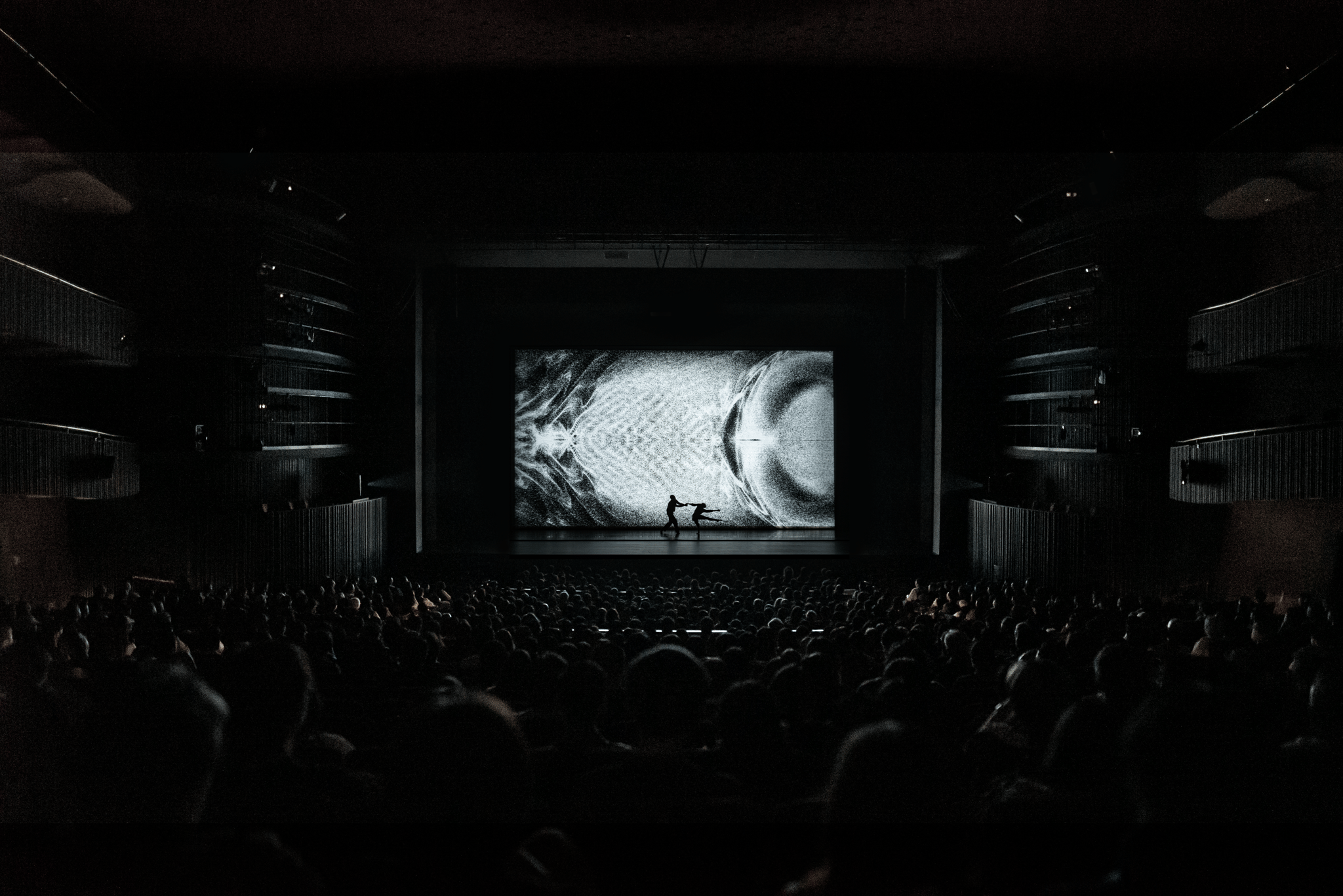
National Taichung Theatre, 2025 | ph. Matteo Torsani
Sál is a live media opera by fuse*
Art Direction, Executive Production: Mattia Carretti, Luca Camellini
Choreography: Diego Tortelli
Performers: Hélias Salvador Dorvault, Vittoria Franchina
Concept: Mattia Carretti
Visual Research, Technical Direction: Luca Camellini
Music Composition: Riccardo Bazzoni
Visual Development: Alessandro Mintrone
Software Development: Matteo Amerena, Matteo William Salsi
Light Design: Stefano Cane, Matteo Amerena
Hardware Engineering: Matteo Amerena, Davide De Marco
Communication and Copy: Virginia Bianchi, Filippo Aldovini, Giulia Caselli, Olimpia Zamò
Production Assistant: Filippo Aldovini, Virginia Bianchi, Martina Reggiani
Sál is co-produced by the National Taichung Theater in Taiwan, where the world premiere has been held on April 26-27, 2025.
With the support of the Centro di Residenza Emilia-Romagna “L’Arboreto – Teatro Dimora | La Corte Ospitale.”
We would like to thank all the members of the fuse* team who contributed to the creation of this project in any way.
Roberto Ferrari, for his support in writing the concept of Sál, for accompanying us during the production, and for the development of the Sál | Rite project.
Guidalberto Bormolini and Frank Ostaseski for inspiring us through their texts and teachings.
Elena Annovi, for the work done together in the early stages of Sál's development and for accompanying us in bringing this trilogy to life. Fabio Calvisi, Samuel Puggioni, Nicola Berselli, Andrea Cerè, Giulia Sarah Gibbon.
Alessandro Pelli and the team at Teatro B. Asioli
ERT – Emilia Romagna Teatro.
Yinnu Chen, Escher Tsai and the whole Hello World team for accompanying us with support and dedication in bringing the world premiere of Sál to life.
Daniel R. Mayerson and Fabio Bacchini for their support with “FOORT: Flexible Object-Oriented Ray Tracing”.
The visualizations were created using the BHAC ‘Black Hole Accretion Code’, developed by Oliver Porth together with Hector Olivares, Bart Ripperda, Fabio Bacchini, Yosuke Mizuno, Ziri Younsi, Luciano Rezzolla, Elias Most, and Lukas Weih, at Goethe University Frankfurt as part of the ERC Synergy grant “BlackHoleCam: Imaging the Event Horizon of Black Holes” (Grant No. 610058), with the responsible parties H. Falcke, M. Kramer, and L. Rezzolla.
We thank the Virgo Consortium for making available the data from the EAGLE simulation.
The visualizations were also created using the RAPTOR tool, developed by T. Bronzwaer and J. Davelaar at Radboud University Nijmegen (NL).
Sál was developed using openFrameworks and powered by NOITOM’s MOCAP Perception Neuron system.