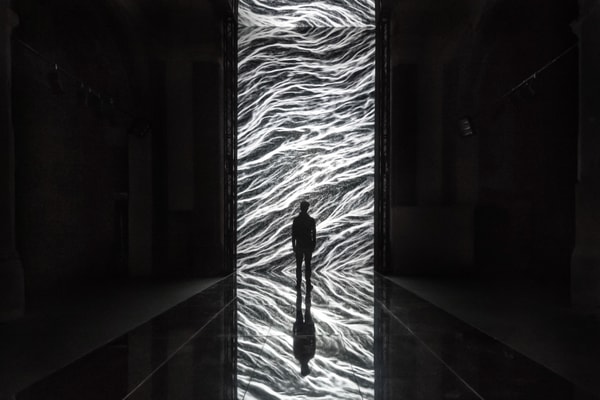
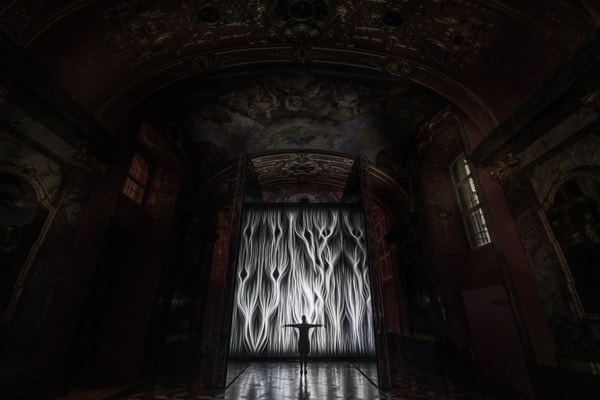
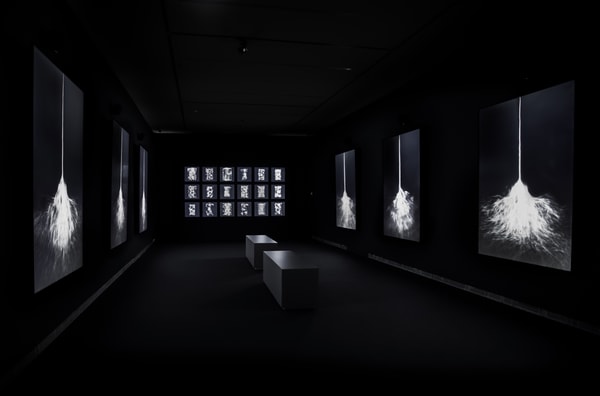
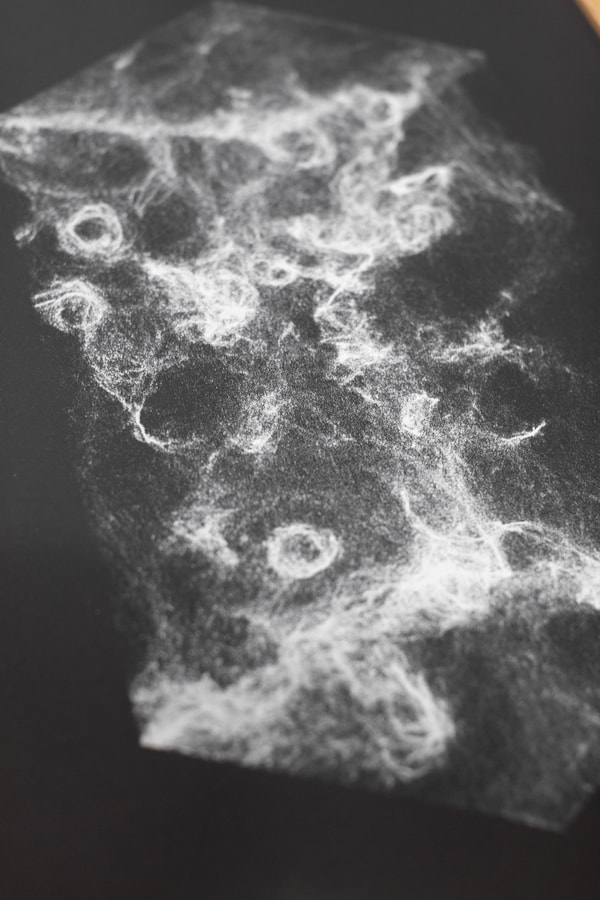
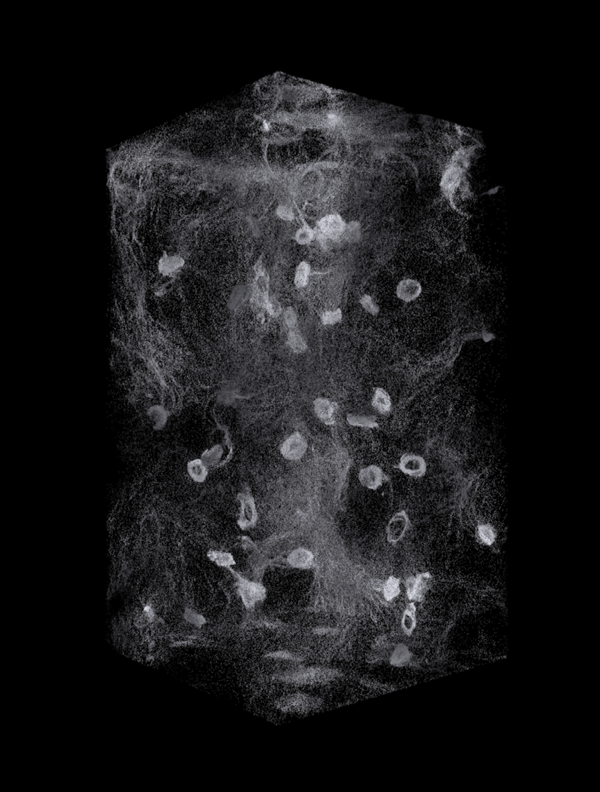
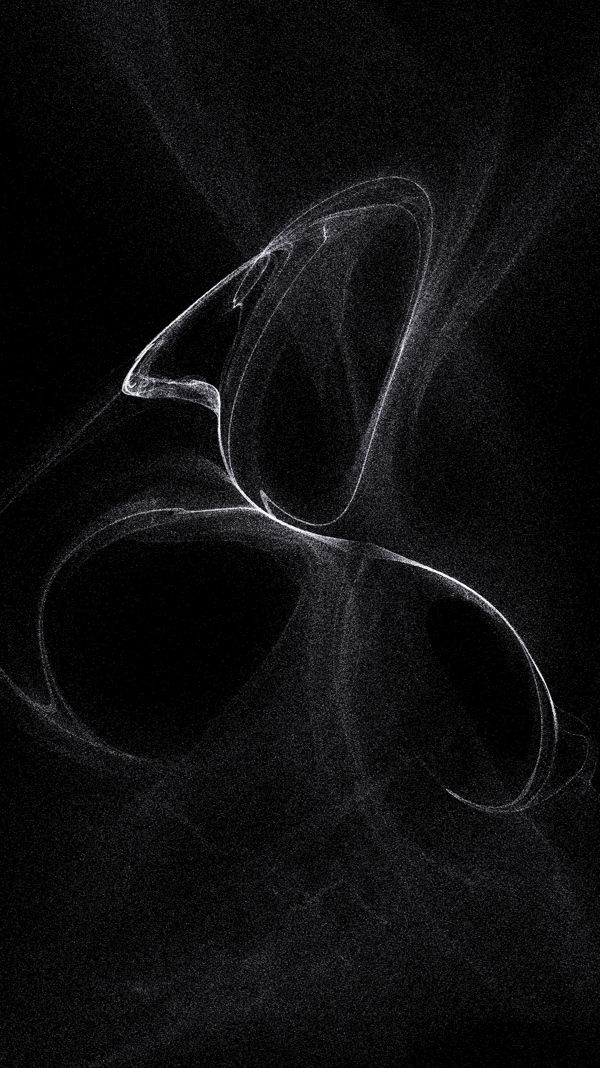
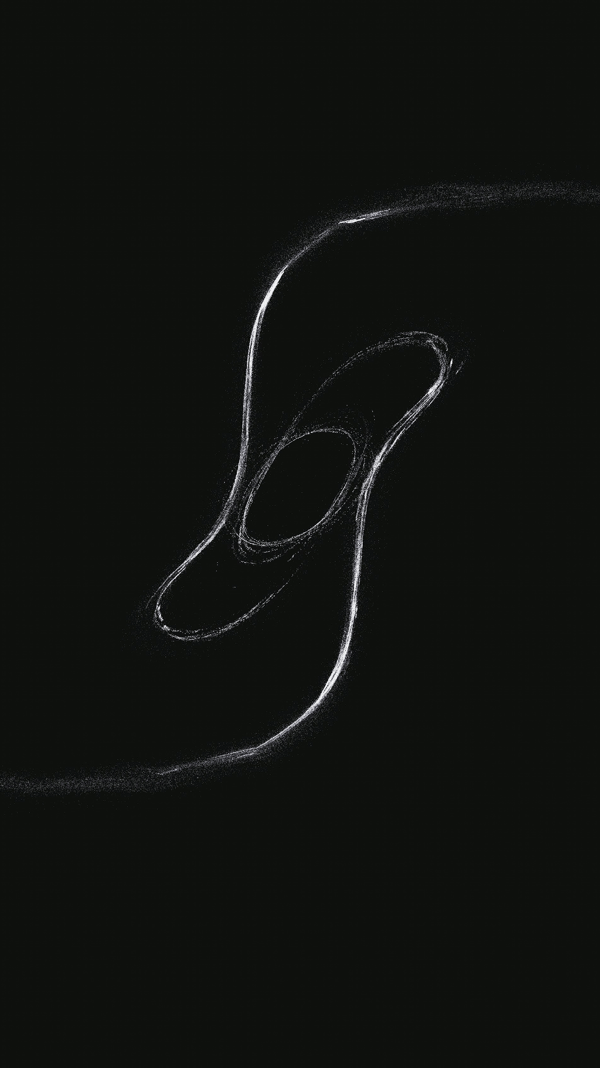
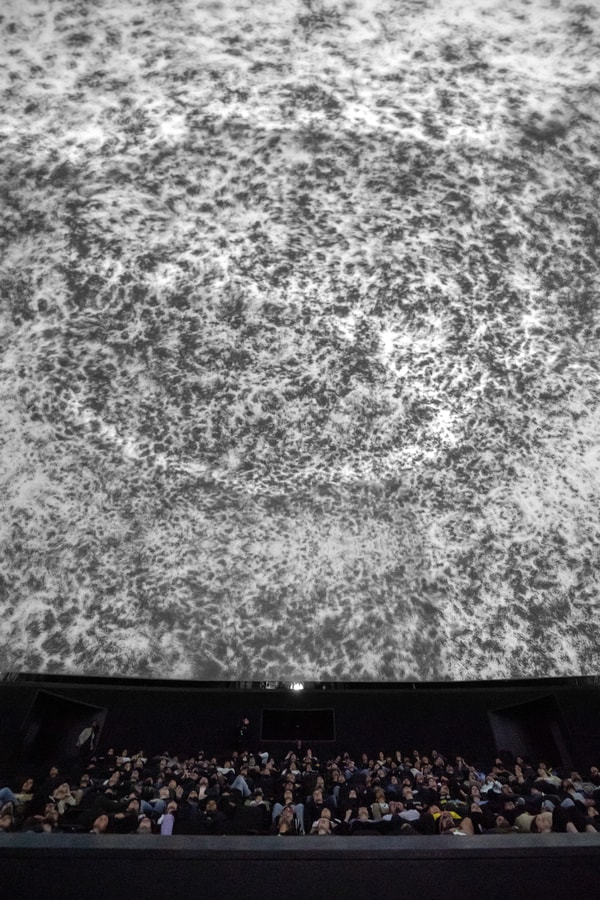
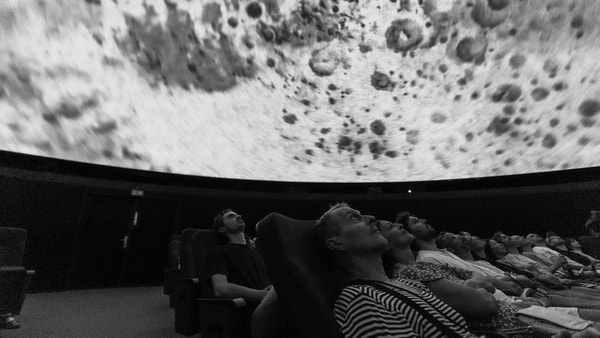
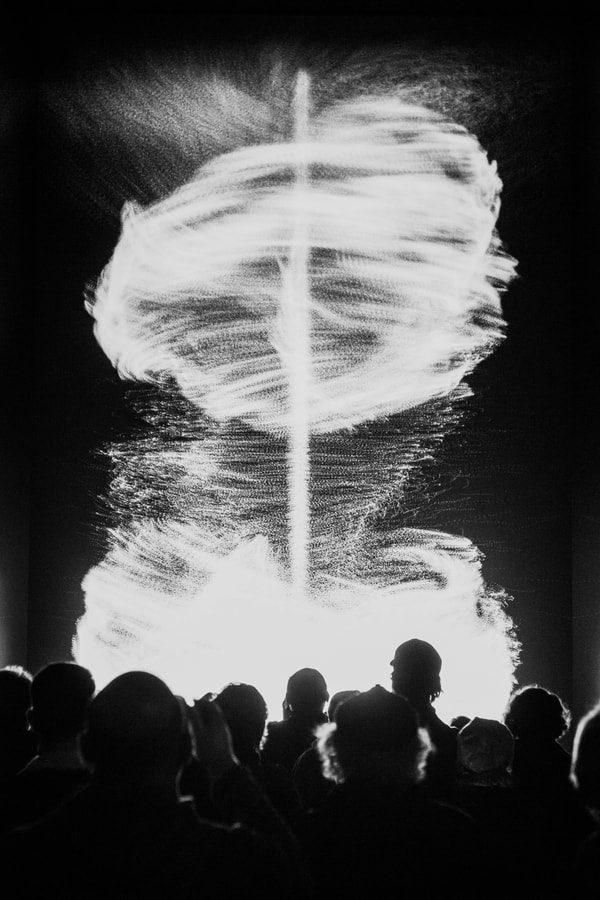
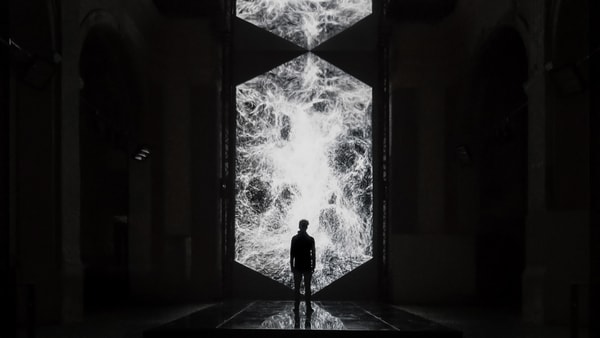
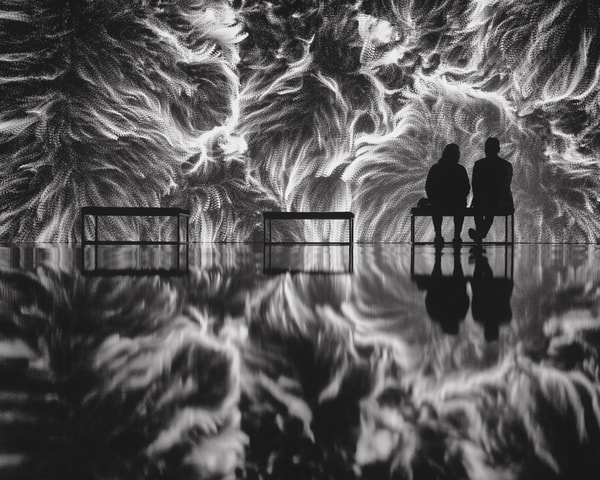
Multiverse is an audiovisual installation that explores the potentially infinite evolution of universes through generative visuals and sounds. Inspired by the theory of the so-called ‘multiverse’, formulated by the American theoretical physicist Lee Smolin, the work builds on the idea of an interconnected and infinite system of universes that coexist outside our space-time. With this focus, the installation weaves together a succession of real-time generated digital paintings, reinterpreting the eternal cycle of death and rebirth of parallel universes.
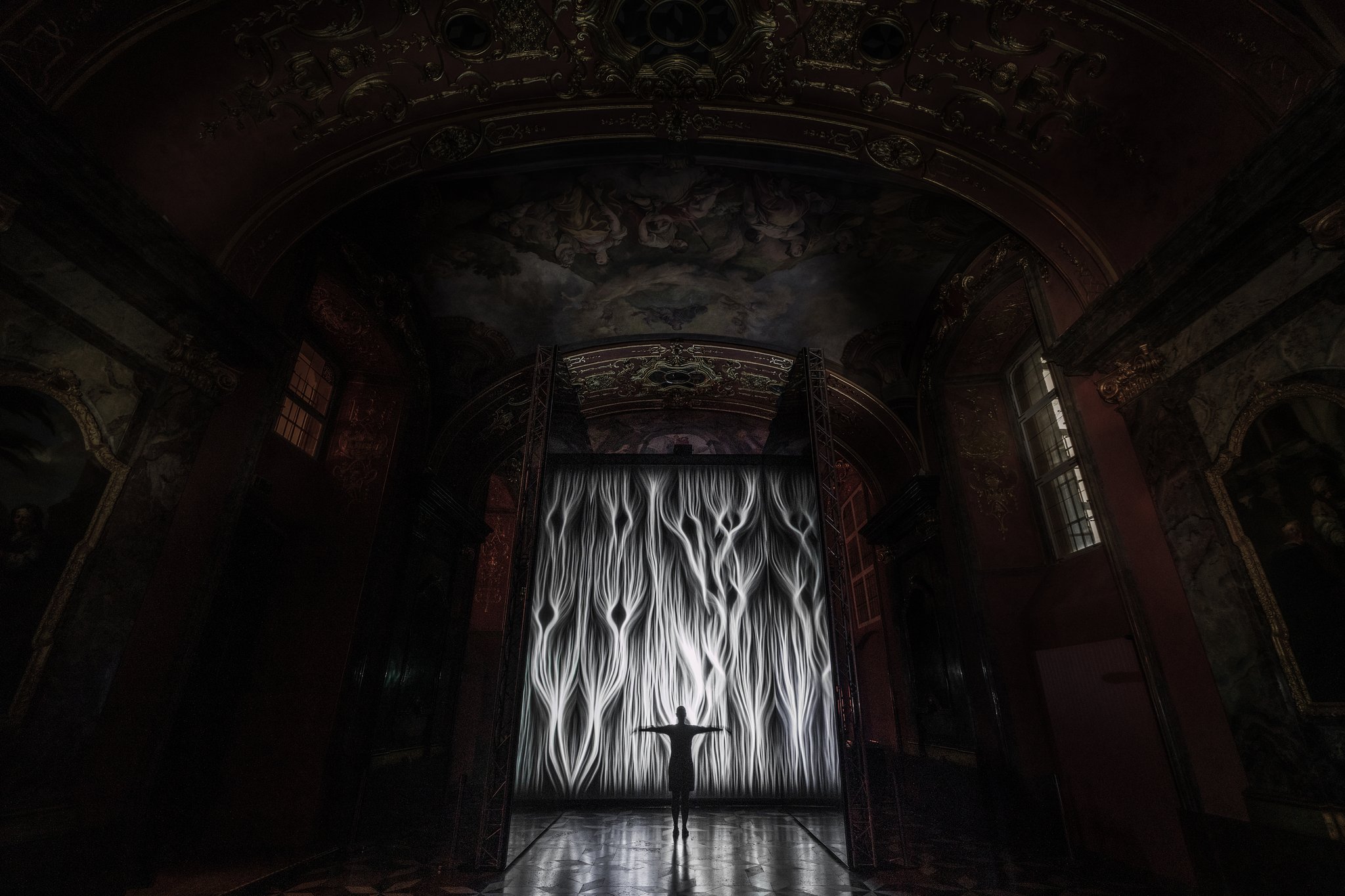
Signal Festival, 2019
Also called “Cosmological Natural Selection”, the multiverse theory of Lee Smolin is at the basis of the narration: first published in 1992 in the book “The Life of the Cosmos”, this theory reports that our universe is one of many located in a much larger cosmos (the Multiverse), where each universe is born from the collapse of matter following the formation of a black hole. During this event, the values of certain parameters of physical laws are reprogrammed and slightly modified. This process leads to a radically new image of a multiverse where universes with more black holes have more descendants, applying a process analogous to biological natural selection to the grandest scale. Following this line of reasoning, Smolin concludes that this is how our universe was born in this particular configuration: consequently, the existence of ourselves and the earth as we know it is partly fortuitous, partly the result of an infinite evolution of other universes.
Multiverse aims to create a relationship of great intimacy and connection with the viewer, while at the same time wanting to establish a massive and seemingly insurmountable distance between the two main characters of the experience: on one side the ephemeral and vulnerable human figure, and on the other something extremely vast and incomprehensible, almost impenetrable, such as the universe.
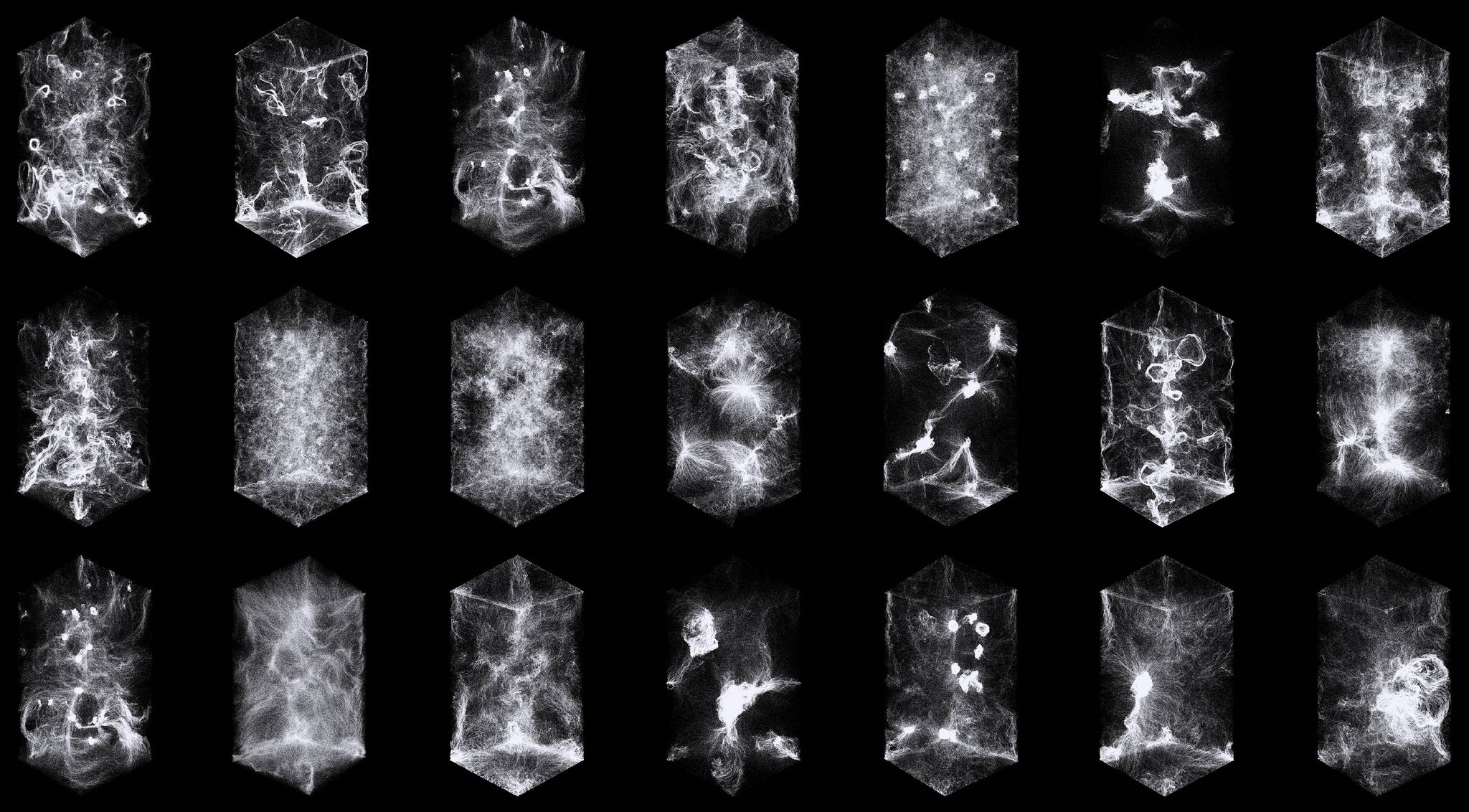
In order to explore this eternal formation of universes interconnected to one another through a mother-child relationship, we decided to create a work based on various representations of different moments in the story of a universe. The role of the “creator” belongs to the software, an application developed in openFrameworks that manages the generation of the various scenes that are displayed and that interacts with Ableton Live and Max/MSP for the production of the soundtrack through a generative sound system. Each cycle of Multiverse lasts 30 minutes: being a real-time piece, many details change and happen continuously in a different form, while at the same time retaining some information from the previous cycle. This wants to act as a metaphor for the hypothetical Cosmological Natural Selection by Smolin: each newly-born universe could include some slight modifications compared to its parent universe, potentially leading to an evolutionary process where universes with favourable conditions are more likely to continue their reproduction, while others eventually become extinct.
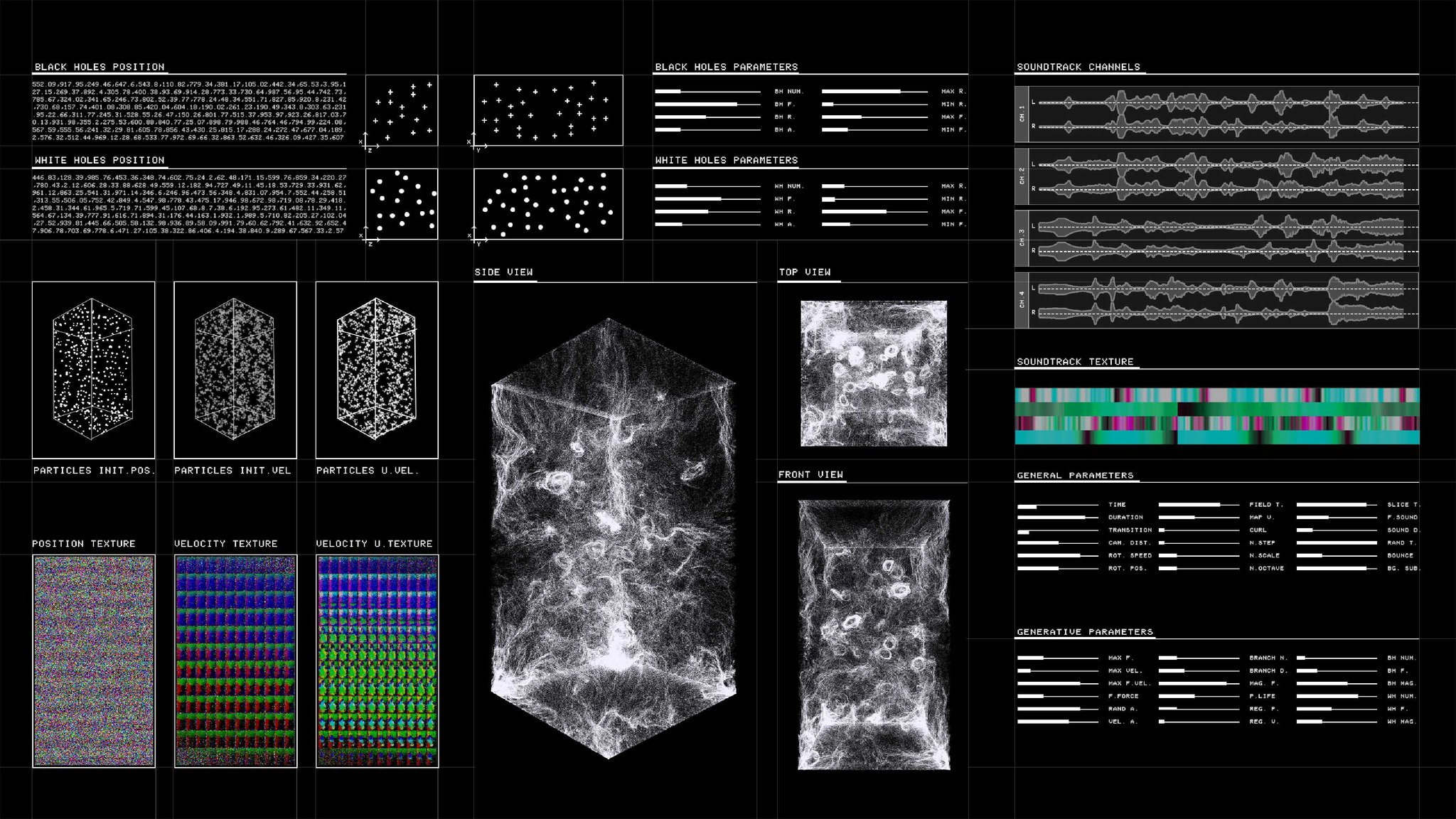
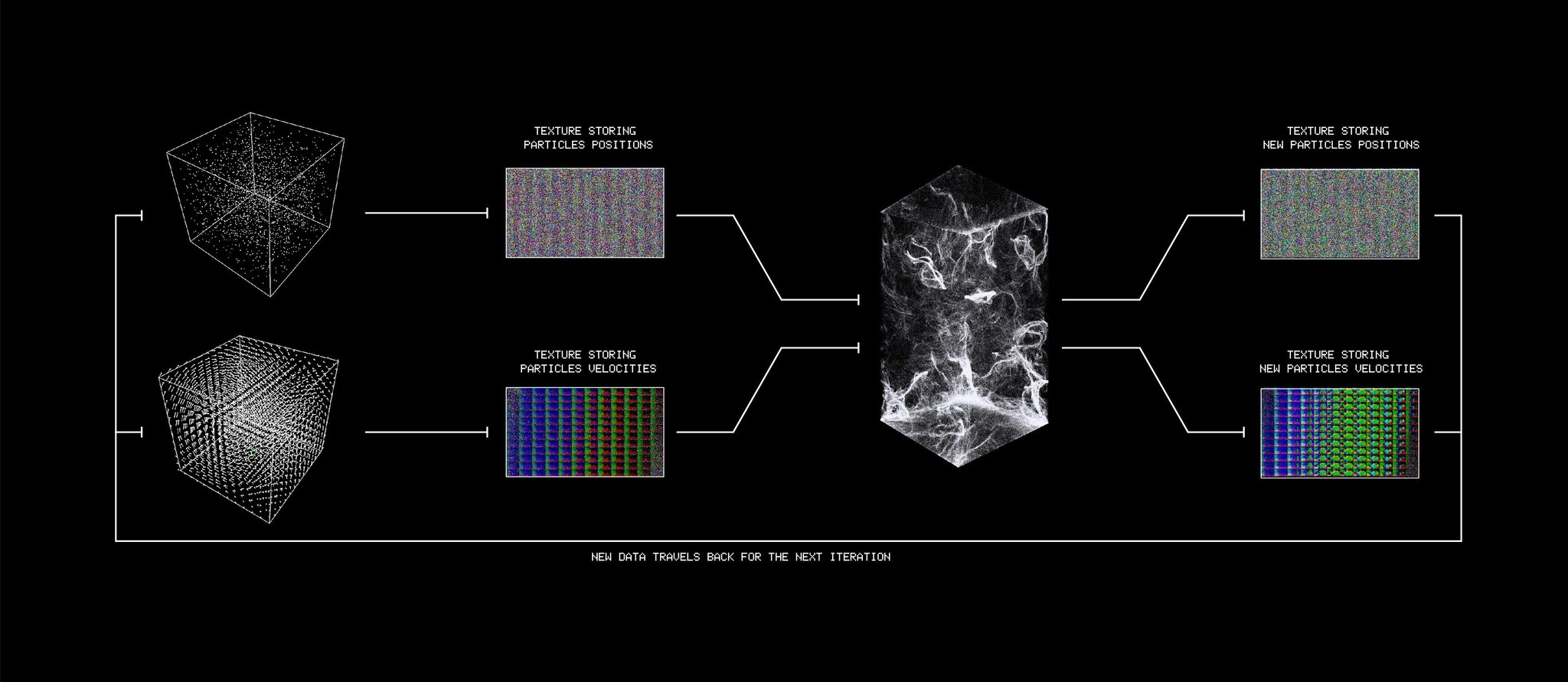
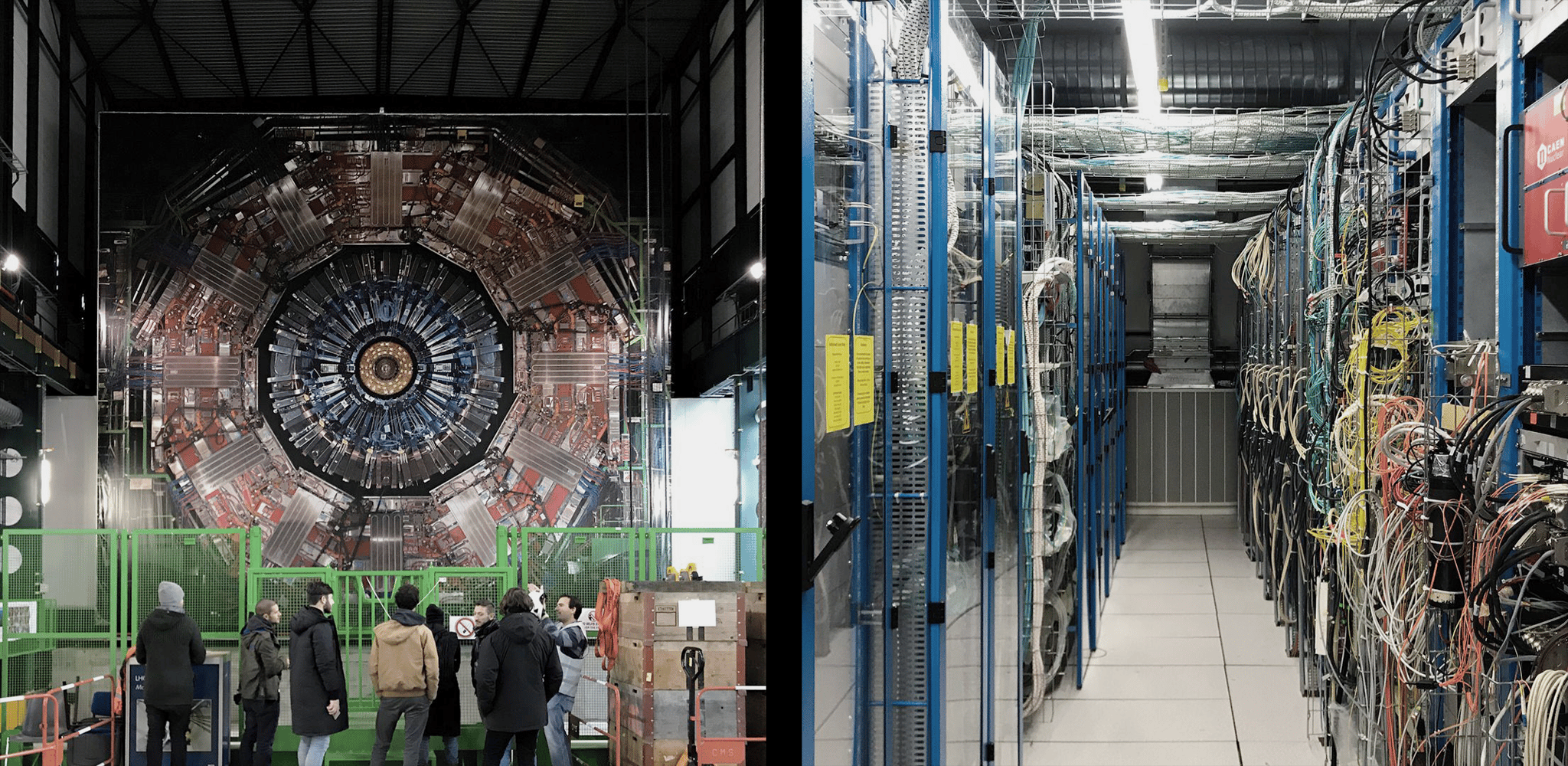
During the conception process, we have been particularly lucky to visit the CERN, the European Organization for Nuclear Research in Geneva (CH). In particular, we have been inspired by the Large Hadron Collider (LHC), the world’s largest and most powerful particle accelerator. Consisting of a 27-kilometer-long ring structure, it was created to accelerate particle beams at close to the speed of light before they are made to collide. This has inspired the sound design for the project: accompanying all 30 minutes of the experience, the sound of the piece has been developed starting from the recording of glass marbles colliding with one another and with various objects. Later, the recordings were edited through audio manipulation and assembled in a real soundtrack alternating hushed, muffled tones with intensely piercing and sharp notes.
Visually, each digital scene represents a stage in the evolutionary path of a multiverse, evolving according to a series of key passages theorized by Smolin. We began with the idea that the gravitational collapse of matter does not end in a singularity of a black hole but gives life to a so-called child universe. While the physical laws of the simulation remain the same each time these events occur, there are minimal random changes in the values of the parameters of these laws during the bounce, leading to the origin of a new universe with slight differences in its fundamental properties.
The particle simulations shown to the viewer are created within a specially designed simulated environment, allowing experimentation with different motion rules and a digital setting. The particles interact with each other and the surrounding space, altering the perceived information by modifying a vector field that stores the values within a voxel space. This strategy involves extensive use of shader programs that maximize hardware performance and optimize the graphics pipeline on the GPU.
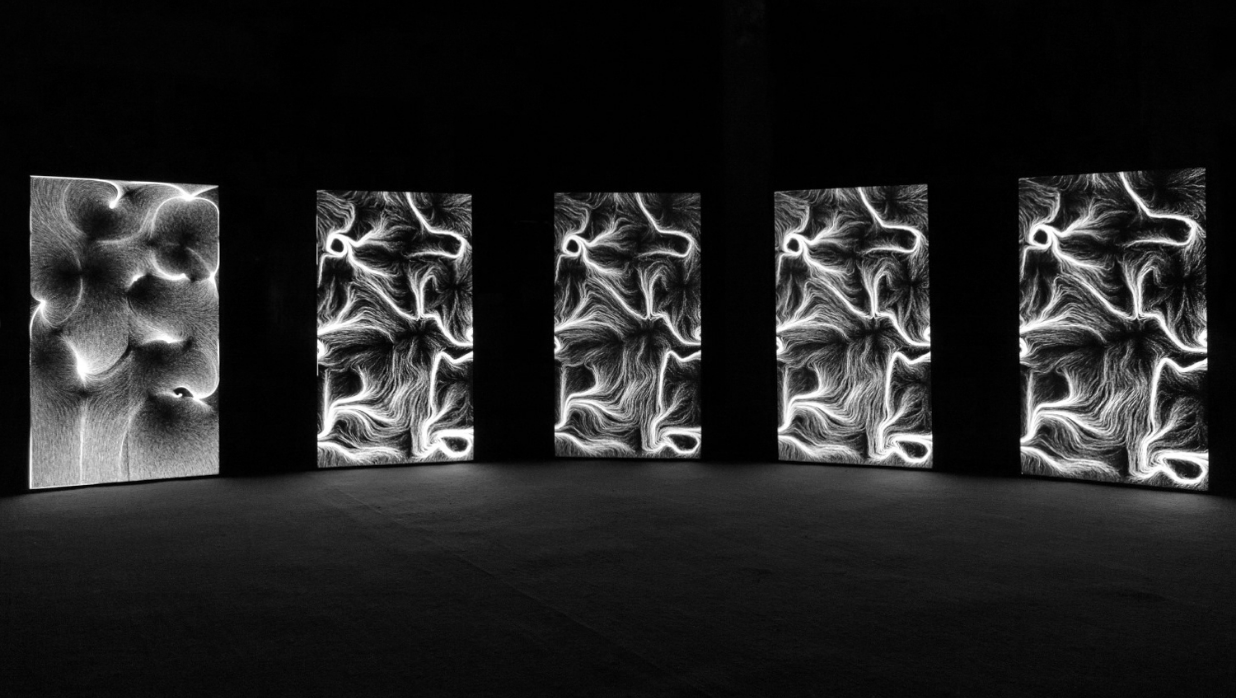
Importantly, each scene does not repeat itself in the same form. After thirty minutes, the previous sequence of steps carrying the genetic information of the last passage triggers an evolutionary transition, exploring new possibilities through the modification of fundamental parameters. The generative nature of the system enables the creation of infinite variations that cyclically follow one another during the life of the artwork.
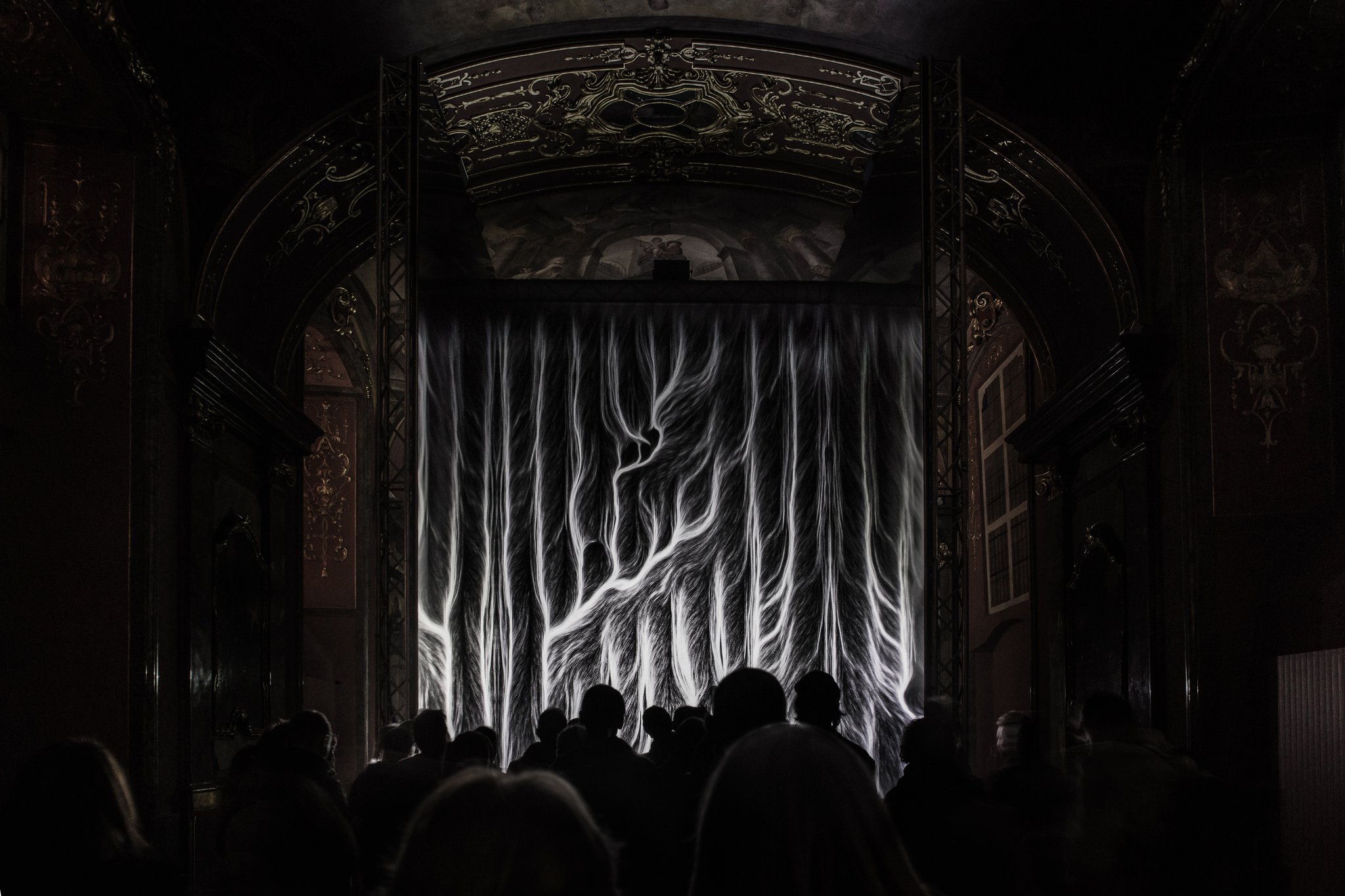
Signal Festival, 2019
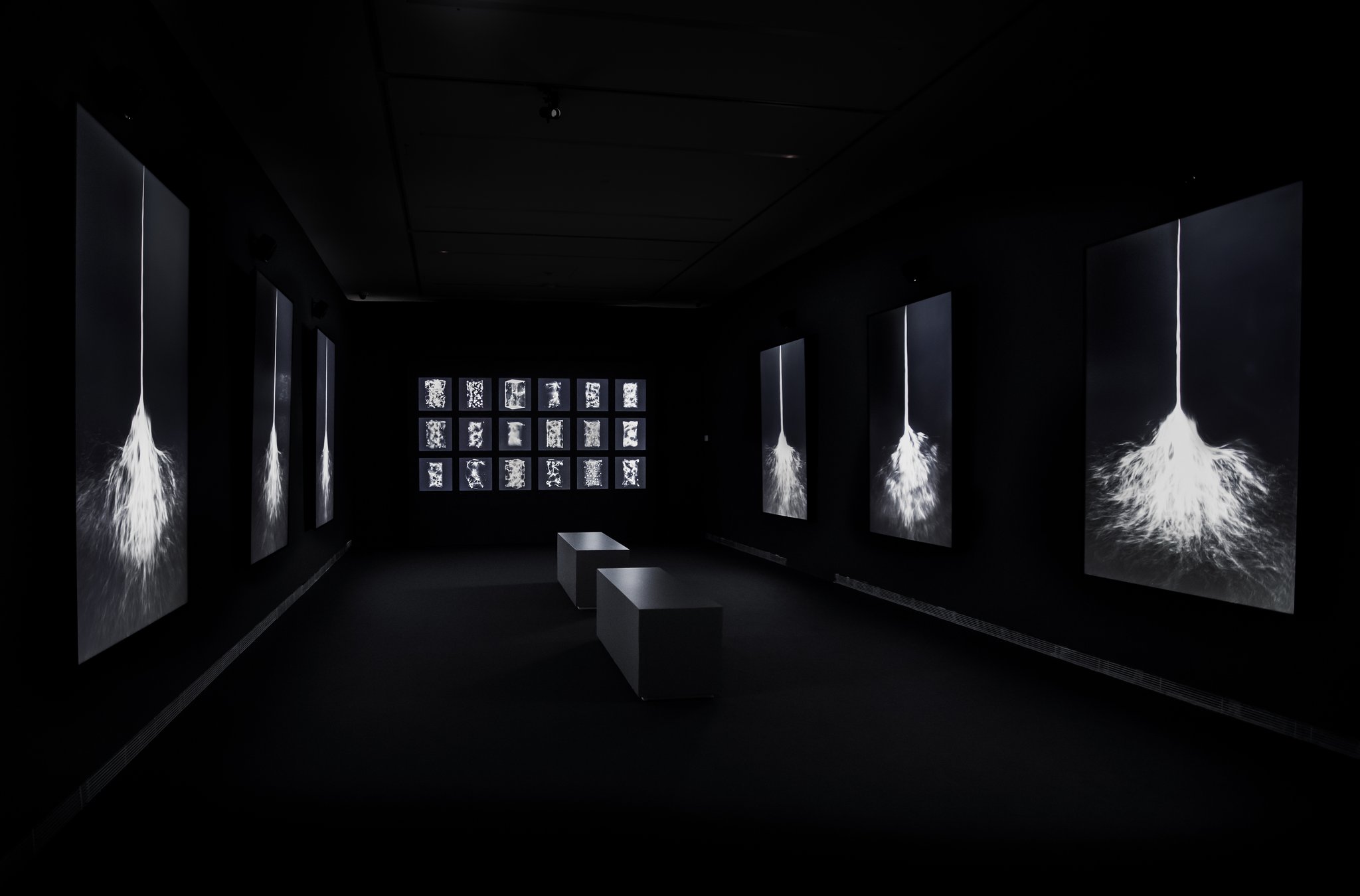
Palazzo Cipolla, 2023
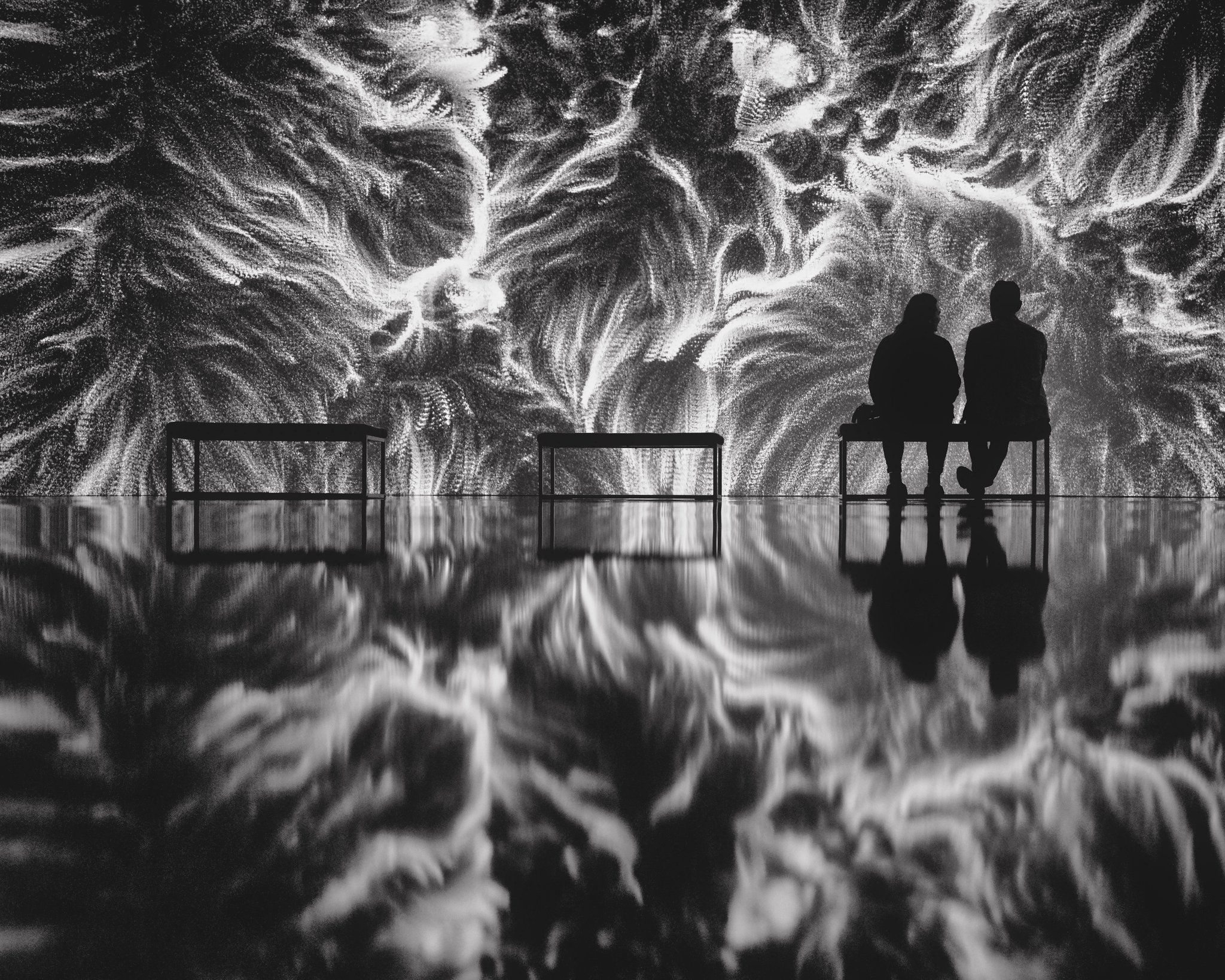
Artechouse DC, 2019
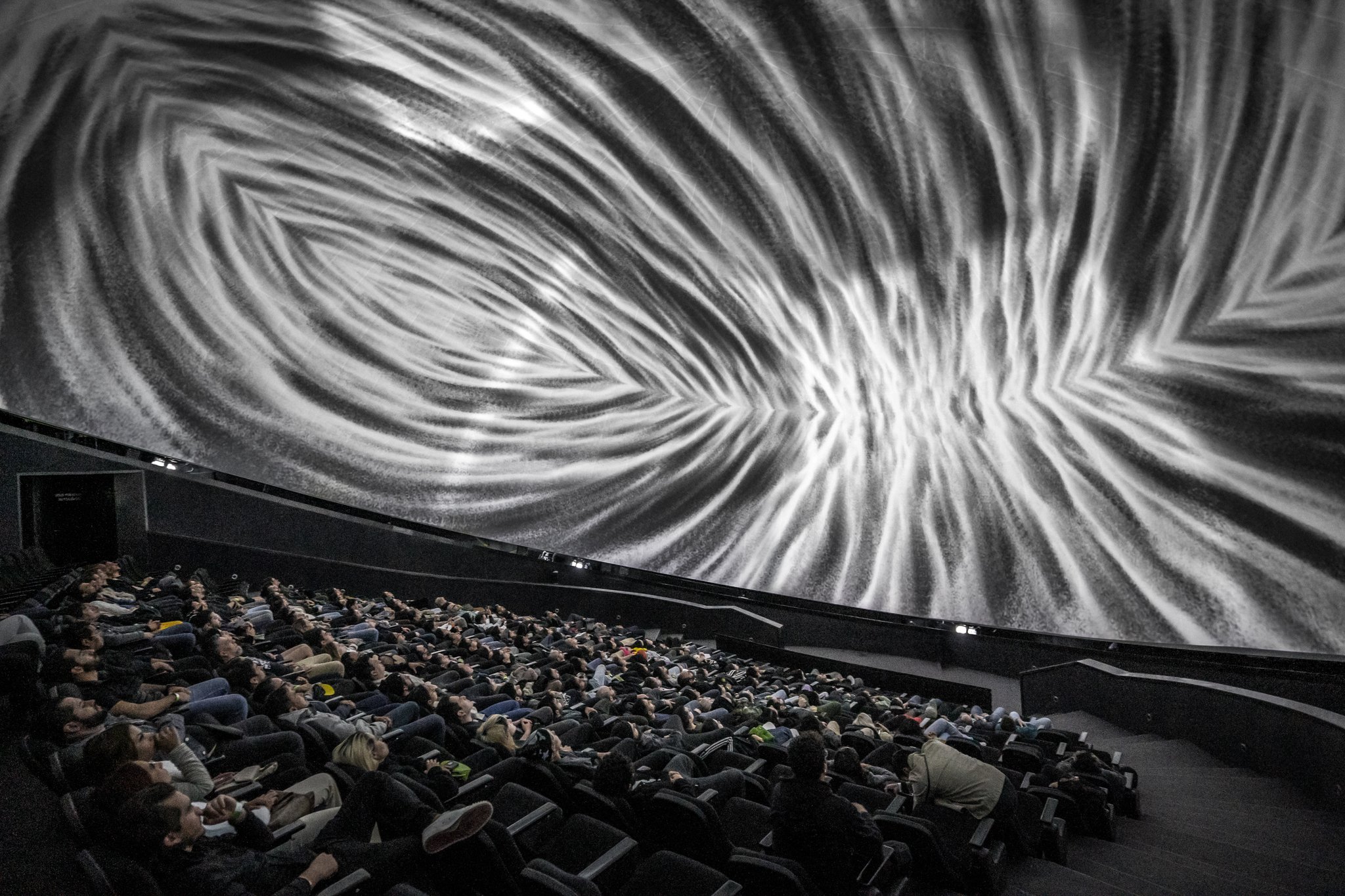
MUTEK MX, 2022
Multiverse has first been realized thanks to the support of Bonanni Del Rio Catalog