Onirica () is a live media performance that explores the ethereal perception of the body within the realm of dreams. Belonging to the series of works of the same name, the performance offers a novel exploration of that same narrative, this time with a new focus on sleep and dreams in their corporeal component. Resulting from a collaboration with Italian choreographer Diego Tortelli, the work fuses dance performance and a cinematic experience, generated in real-time on stage through the interaction between performer and artificial intelligence. The narrative structure is composed of fragments of real dreams sourced from the dream banks of the University of Santa Cruz California and the University of Bologna, which in total contain over 28,000 dreams collected from 1930 to the present day. Through these narratives and their translation into synthetic images, recurring themes emerge from the dream experiences of individuals distant in time and space, reminding us of the shared nature of human experience, uniting us even within the oneiric dimension.
Eerie and raw, Onirica () signifies the studio's return to the stage after a seven-year hiatus following the premiere of Dökk in 2017.
Play
Pause
Mute
Mute
Mute
Unmute
The narrative structure is composed of fragments of real dreams sourced from the dream banks of the University of Santa Cruz California and the University of Bologna, which in total contain over 28,000 dreams collected from 1930 to the present day.
Each dream is unique, a deeply personal experience shaped by individual memories, emotions, and subconscious processes. Yet, across cultures and generations, certain images, themes, and symbols appear again and again—familiar landscapes, surreal encounters, moments of fear, flight, or transformation. These recurring patterns suggest a shared, underlying language of dreams, an invisible thread connecting human experiences beyond time and geography.
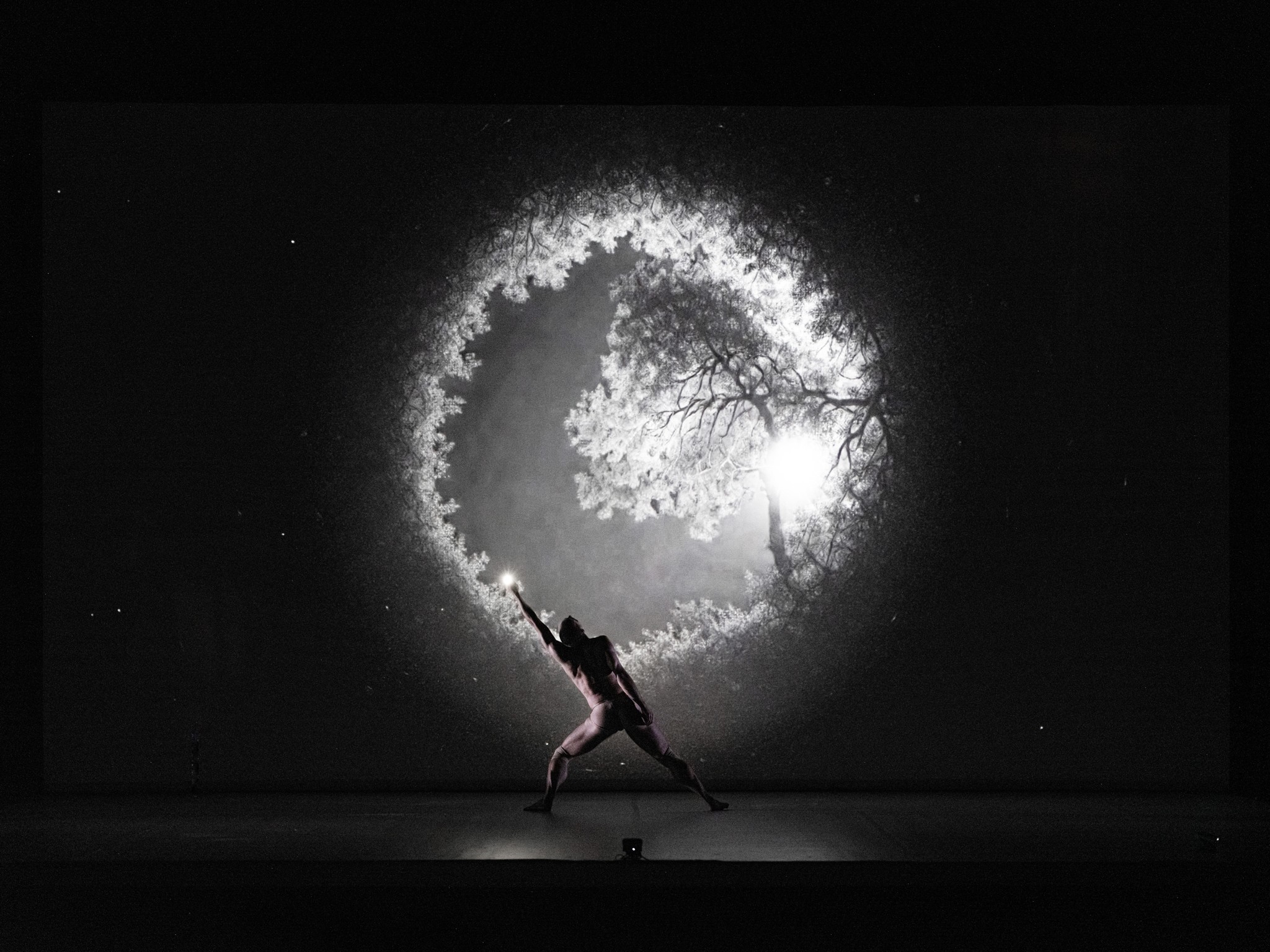
Teatro Asioli, 2024 | ph. Emmanuele Coltellacci
The aim of the project is to navigate this vast archive of dreams, weaving a path that highlights both its peculiarities and its commonalities. By analyzing the dataset, we uncover not only the extraordinary and unexpected elements within individual dreams but also the motifs that echo across thousands of accounts.
These fragmented visions are then crafted into a cinematic journey—one that mirrors the nonlinear and fluid nature of dreaming itself. The performance unfolds like a night’s sleep, moving seamlessly from the drifting surrender of falling asleep to the gradual return of consciousness upon waking, immersing the audience in the rhythms and logic of the dream world.
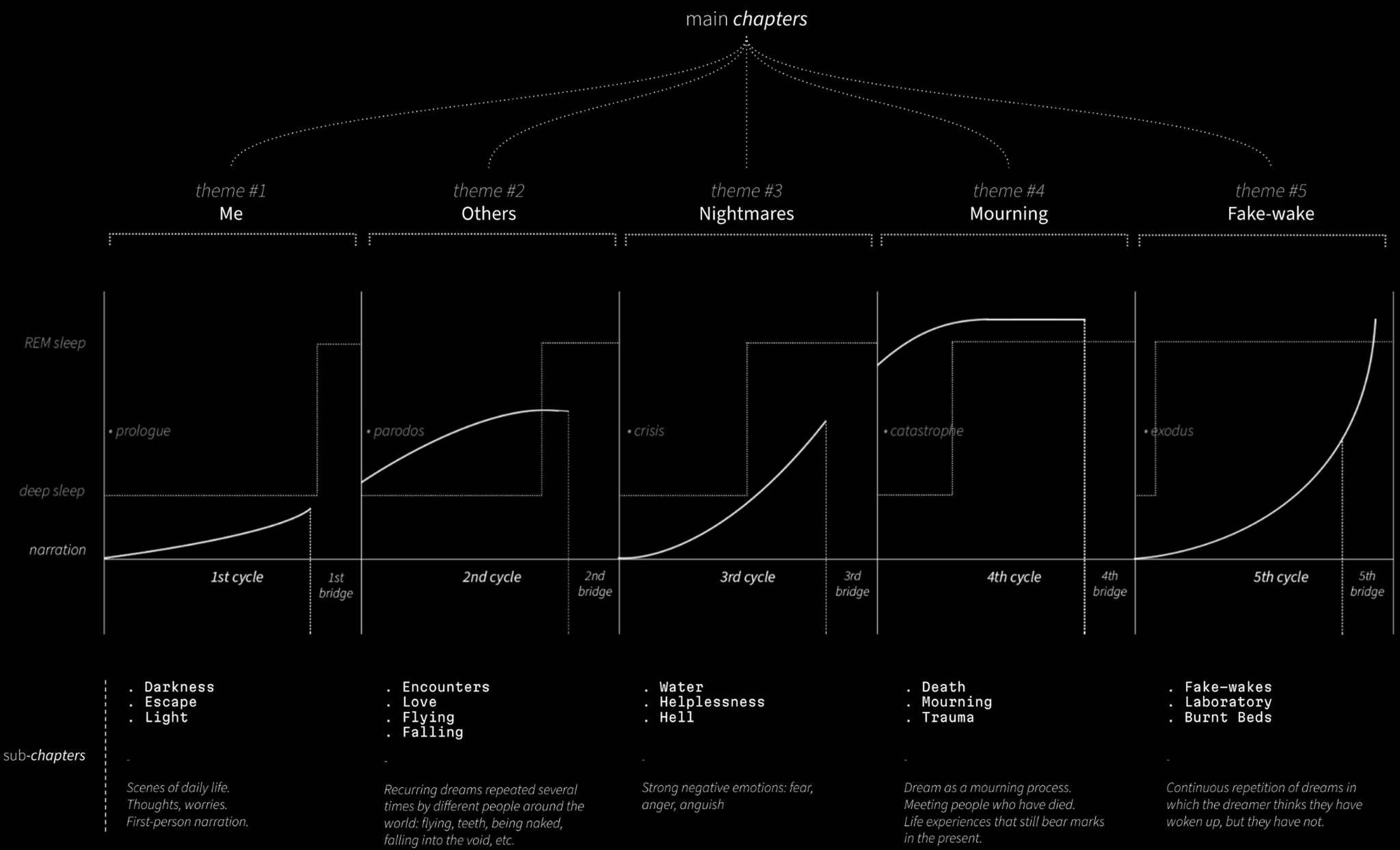
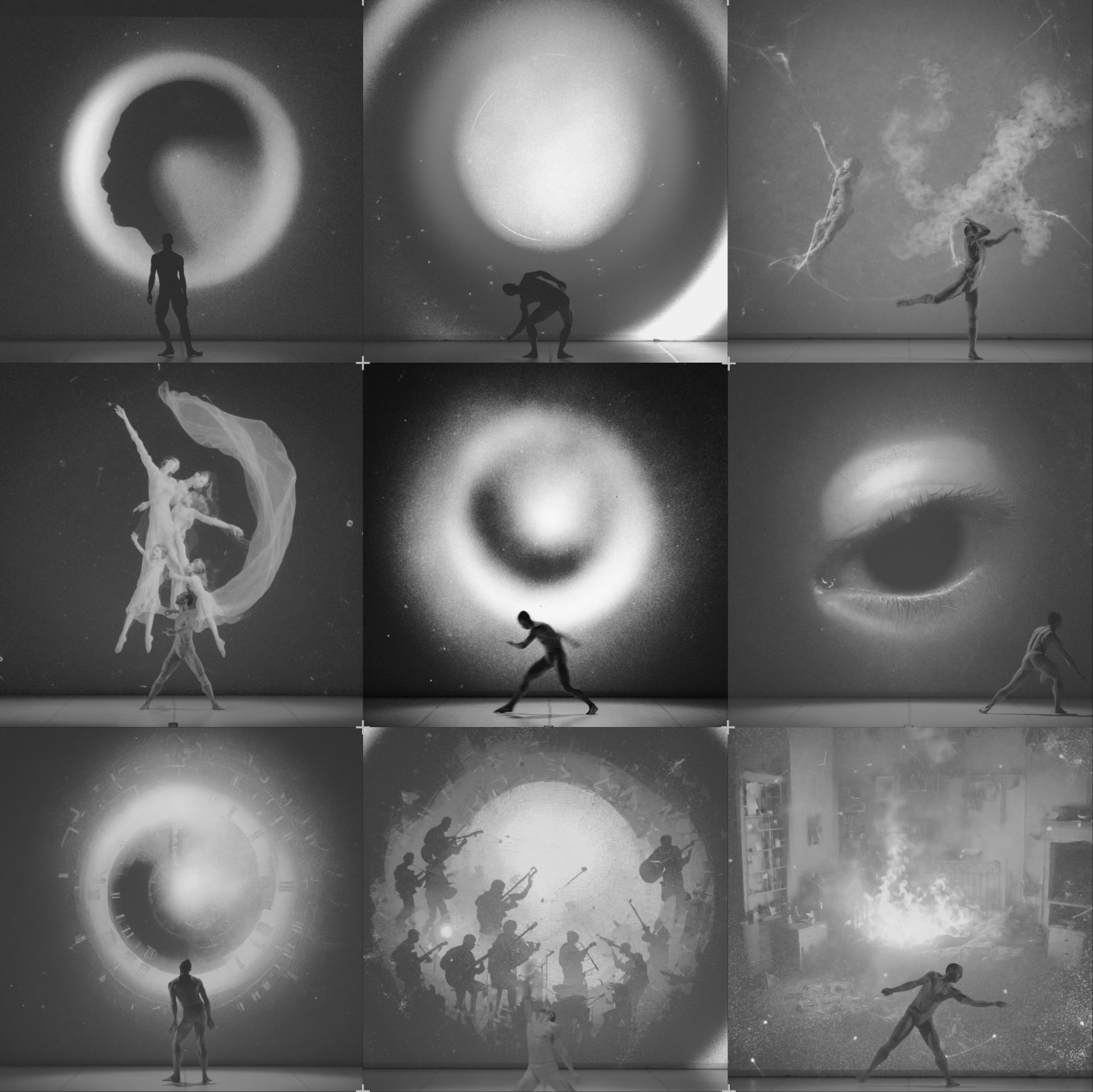
The structure of Onirica () is divided into 5 different cycles, each of them containing thematic clusters of dreams. The narration of the performance is shaped by precise sentences and fragments selected from the 28,000 dreams of the universities’ dream banks.
The structure of the show has been inspired by Greek tragedy and its consistently predefined and precise structure. Onirica () engages with this framework by identifying five main chapters, each connected to a specific theme or narrative. These chapters are further divided into sub-themes that delve deeper into and expand upon the overarching theme.
The aim of the project is to craft a journey that, with growing intensity, leads the viewer through the entire archive of dreams. This journey enables the viewer, in a condensed time frame, to experience the broad spectrum of emotions, encounter bizarre ideas, and explore the recurring themes and narratives that the human mind can generate.
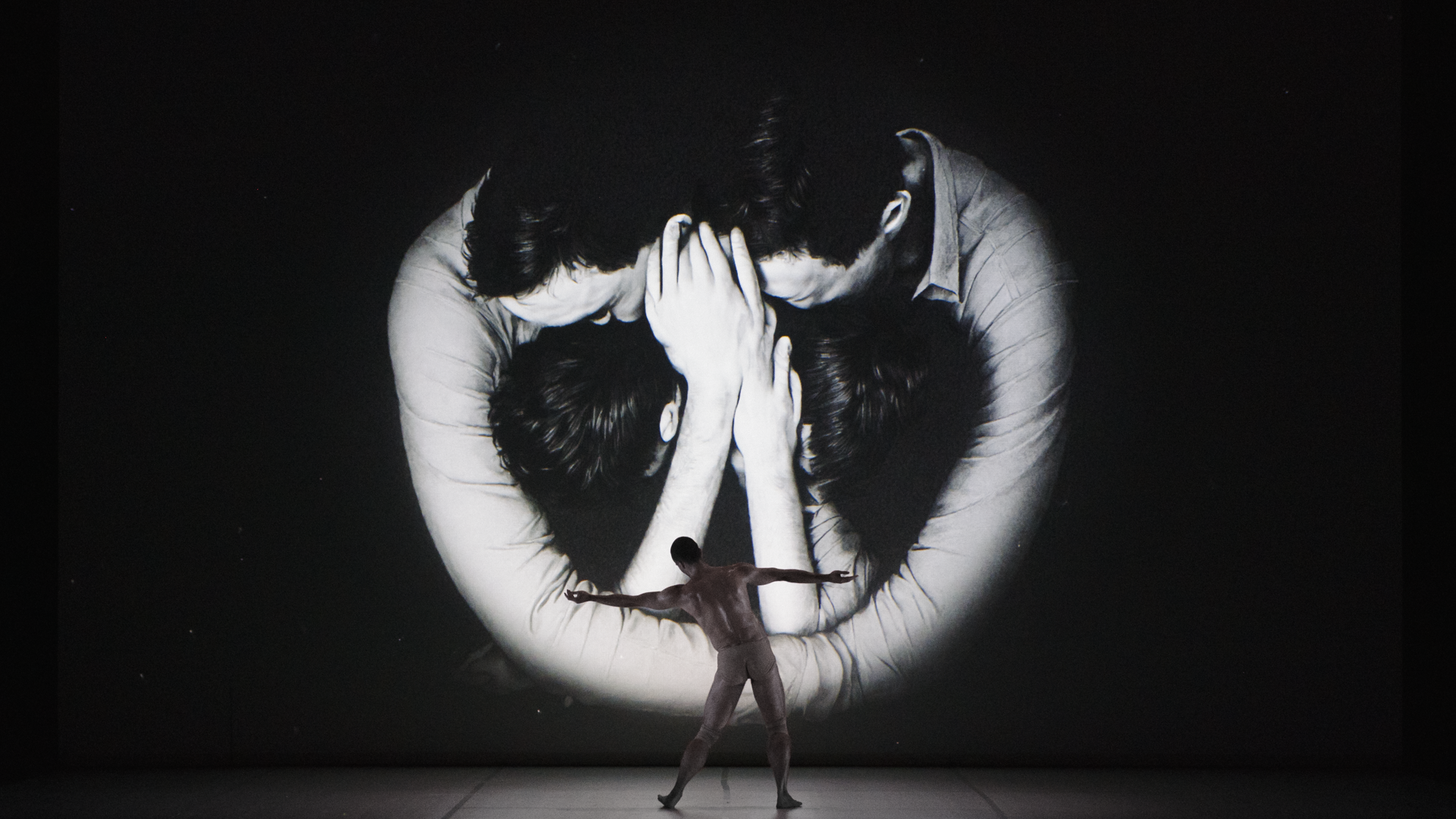
The starting point of the performance is the creative exploration of the experience of sleep and dreams in their physical component. In particular, parasomnias and other corporeal phenomena we can experience during sleep inspired the performer's choreography on stage.
At the same time, the shared experience of the body within the oneiric dimension, where time, space and gravity are continuously altered, also had a significant impact in the choreographic choices. This strange and sometimes uncanny perception of our bodies and movements in dreams is another crucial element that shaped the piece's choreography.
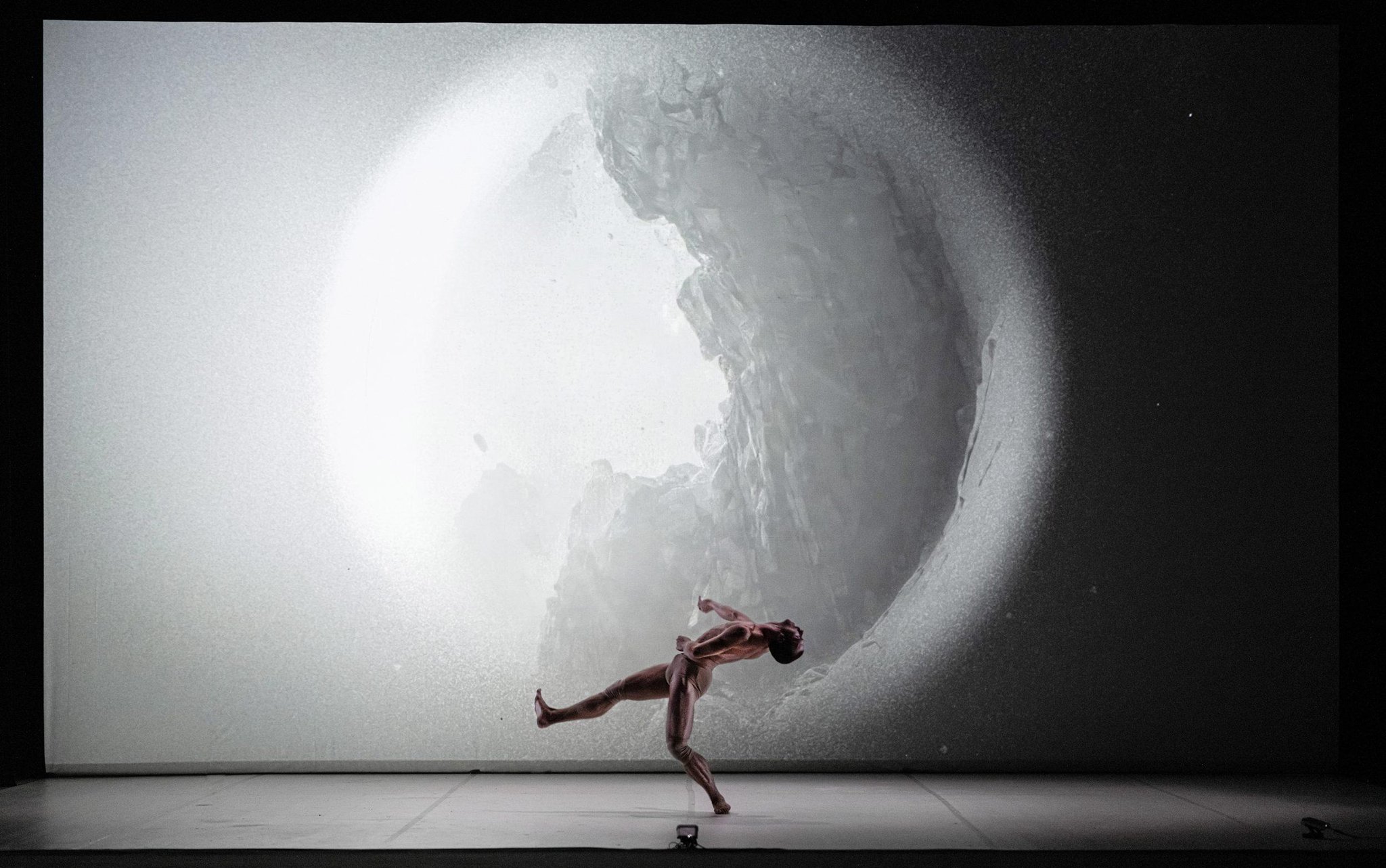
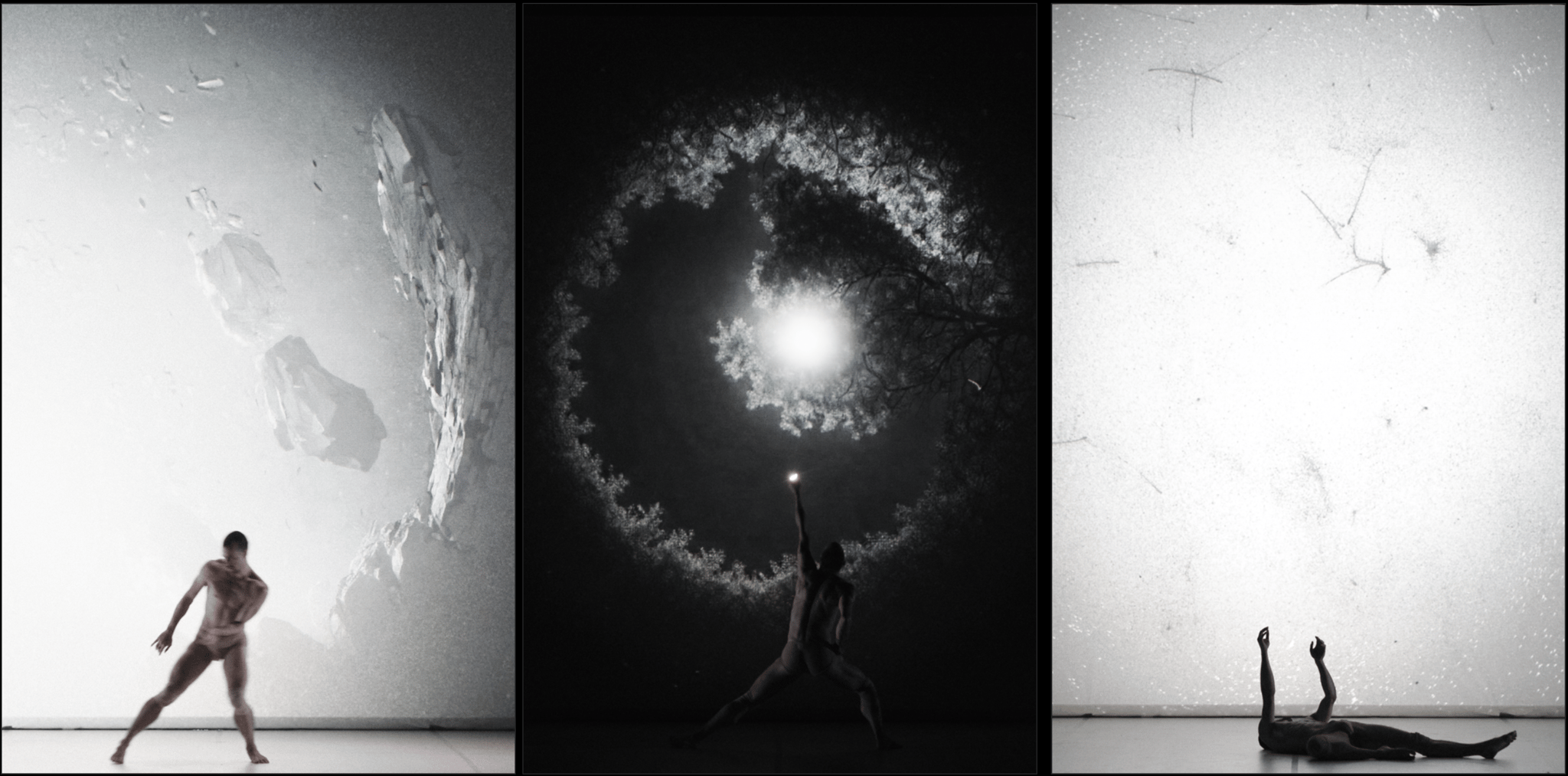
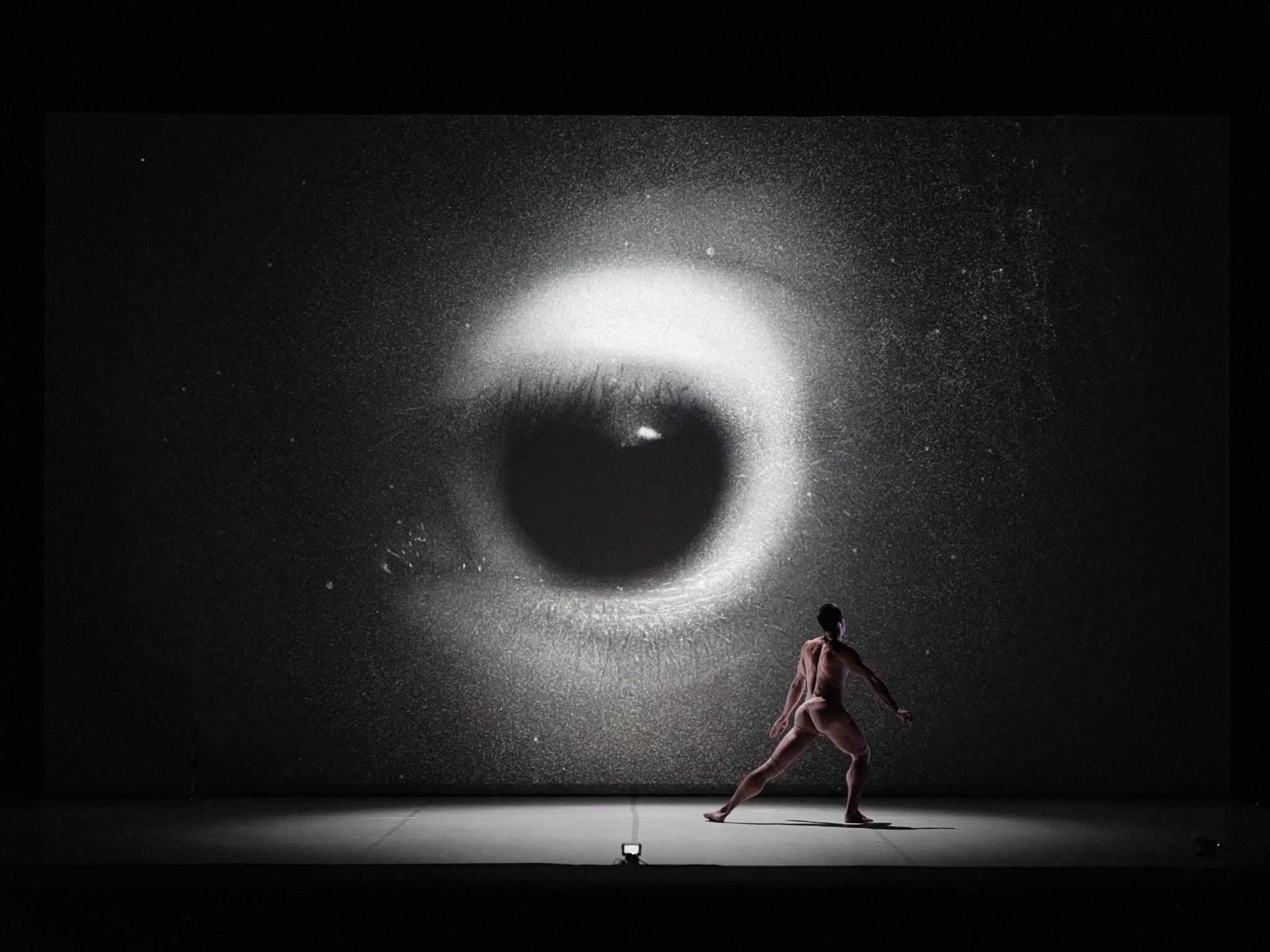
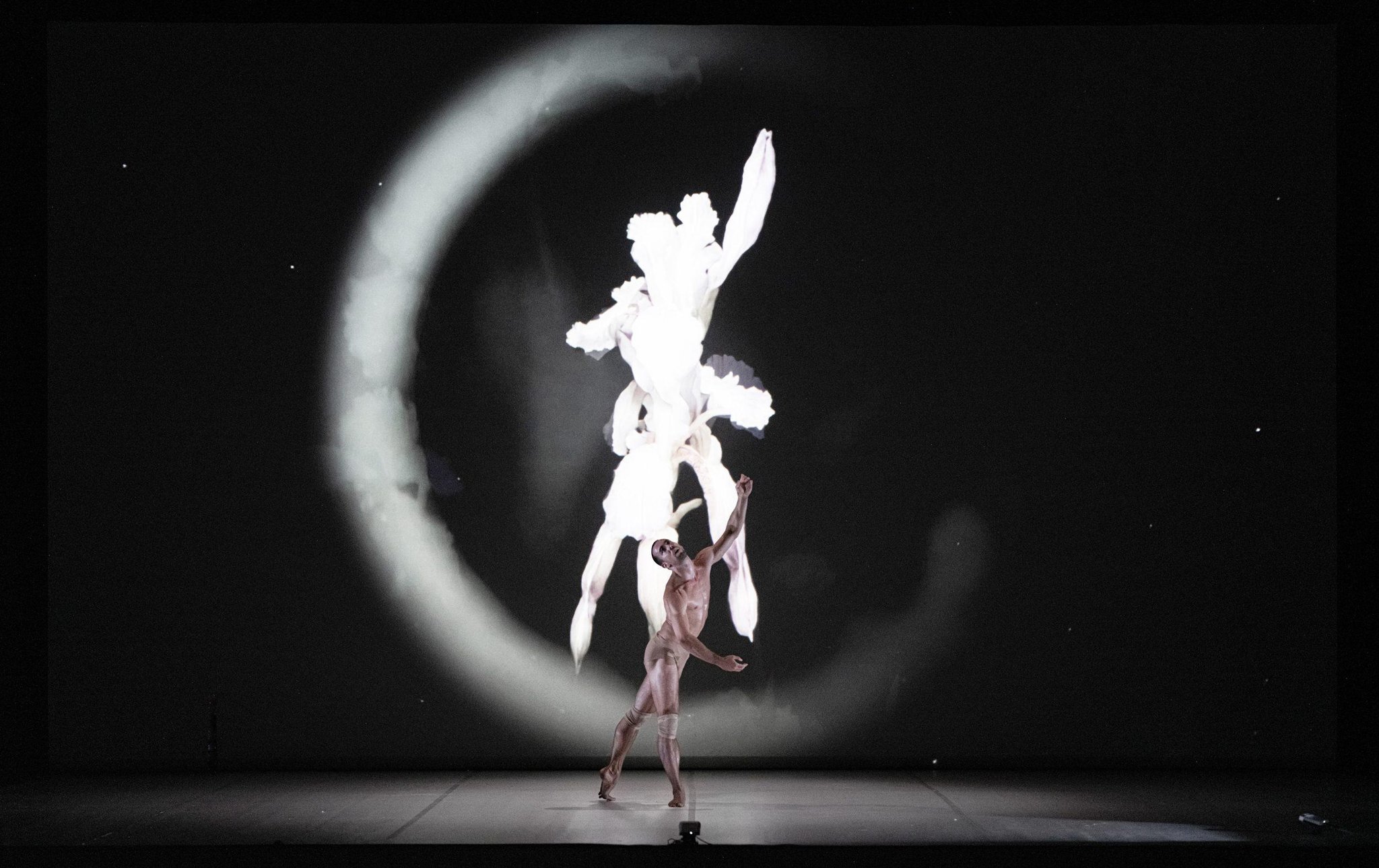
In Onirica (), the performer's body fragments into broken, sudden, and spasm-like movements, alternating with slow and lethargic flows, which influence the background visions. A deeply evocative experience where the raw physicality of the performer's movements starkly contrasts with the synthetic landscapes projected.
The result is a cinematic sequence constructed in real-time through the interaction between bodily movements, dream texts, and the soundtrack of the work. This interaction creates an extraordinary, almost post-human bond, establishing an irrevocable connection between human and machine.
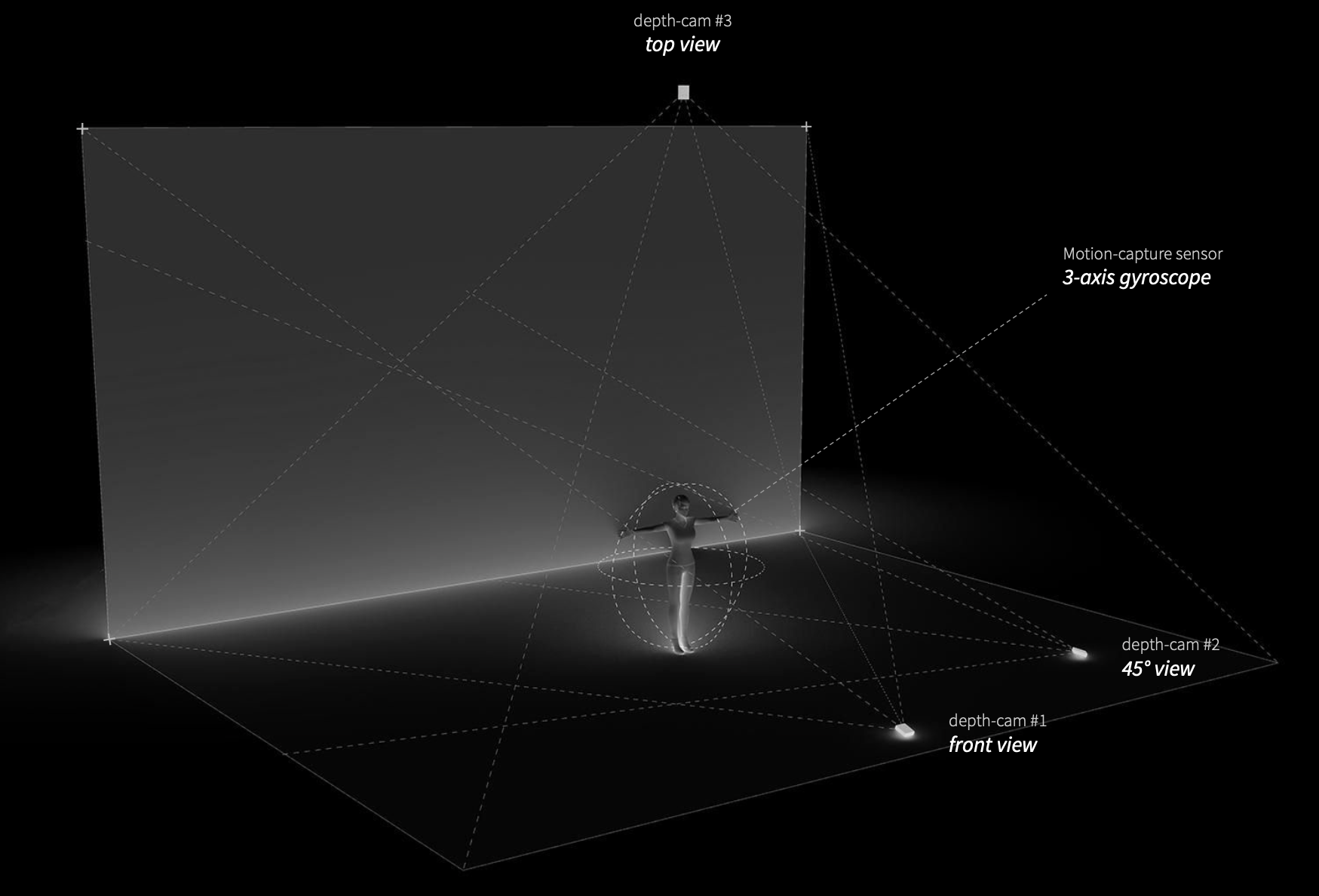
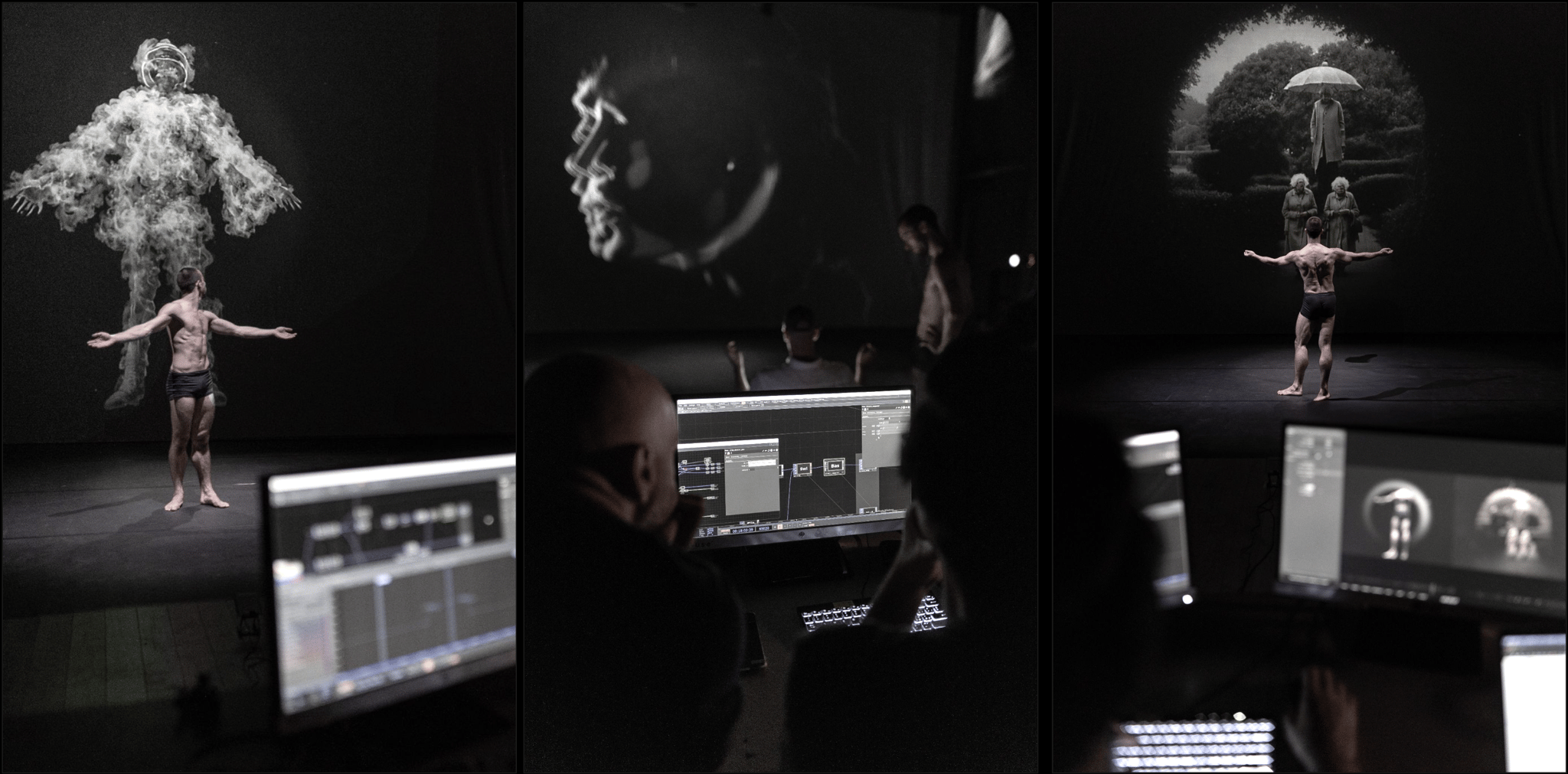
The performance's technical setup includes three depth cameras (RGBD) strategically positioned on stage: one at the front, one diagonally, and one overhead. These cameras isolate the dancer’s body, using this data as input to generate dream-like images. The variety of angles allows the dancer’s body to appear suspended, multiply its forms, and blend seamlessly with the choreography to fill the entire stage space.
Additionally, the dancer wears a three-axis gyroscope that precisely tracks real-time torso rotations, capturing subtle shifts in movement and balance. This sensor enables an even deeper connection between the body and the generated visuals, ensuring that every motion—whether fluid or abrupt—directly influences the evolving digital imagery.
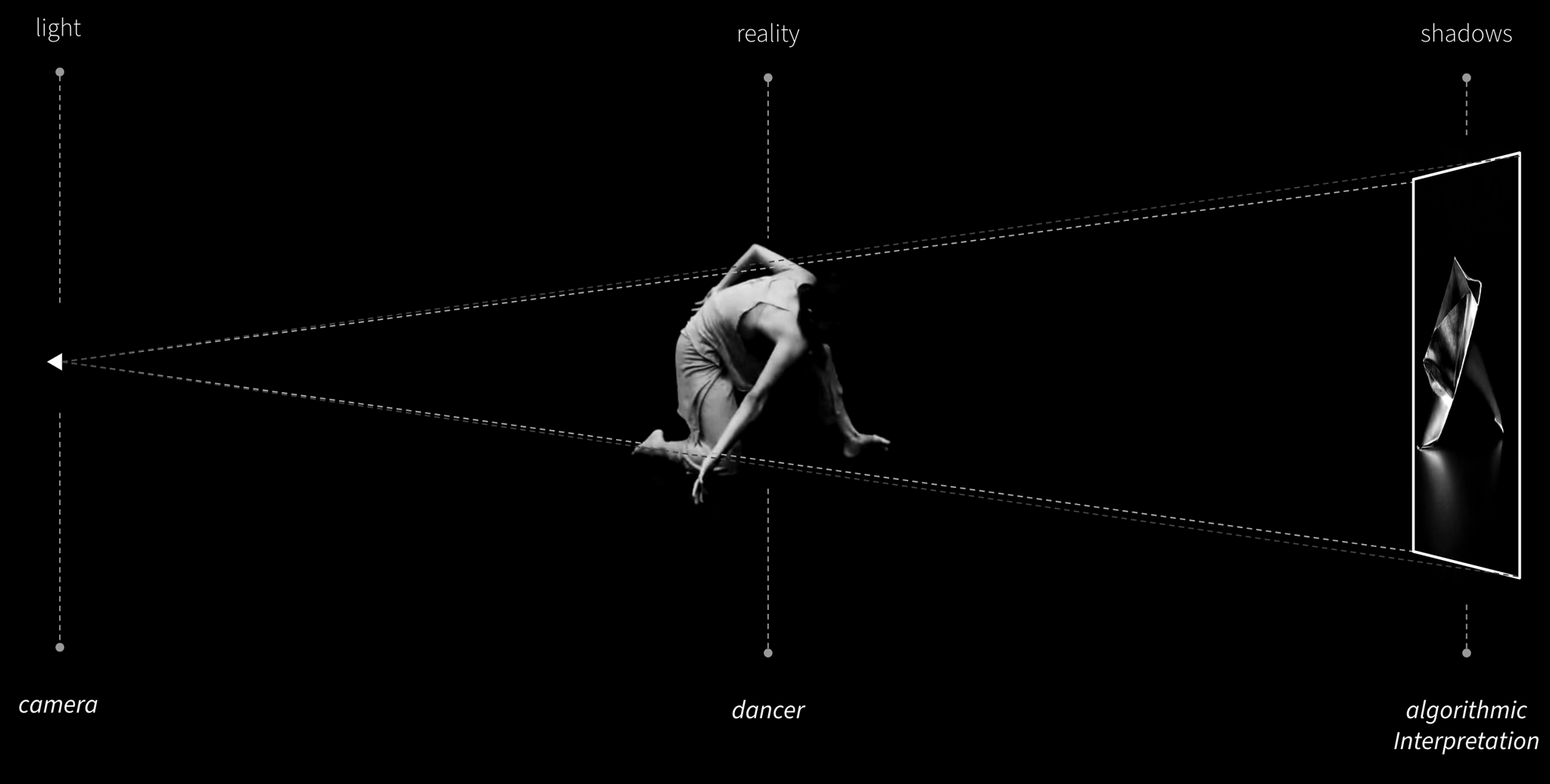
The collected data stream is continuously processed by an algorithm, which translates these physical inputs into a responsive digital canvas. This ever-changing visual field mirrors the unpredictable and fluid nature of dreams, constructing an ephemeral world that exists only in the moment of performance. Through this intricate fusion of movement, technology, and real-time computation, the performance becomes a living entity, where human and machine collaborate to bring the subconscious to life.
Teatro Asioli, 2024 | ph. Emmanuele Coltellacci
Teatro Asioli, 2024 | ph. Emmanuele Coltellacci
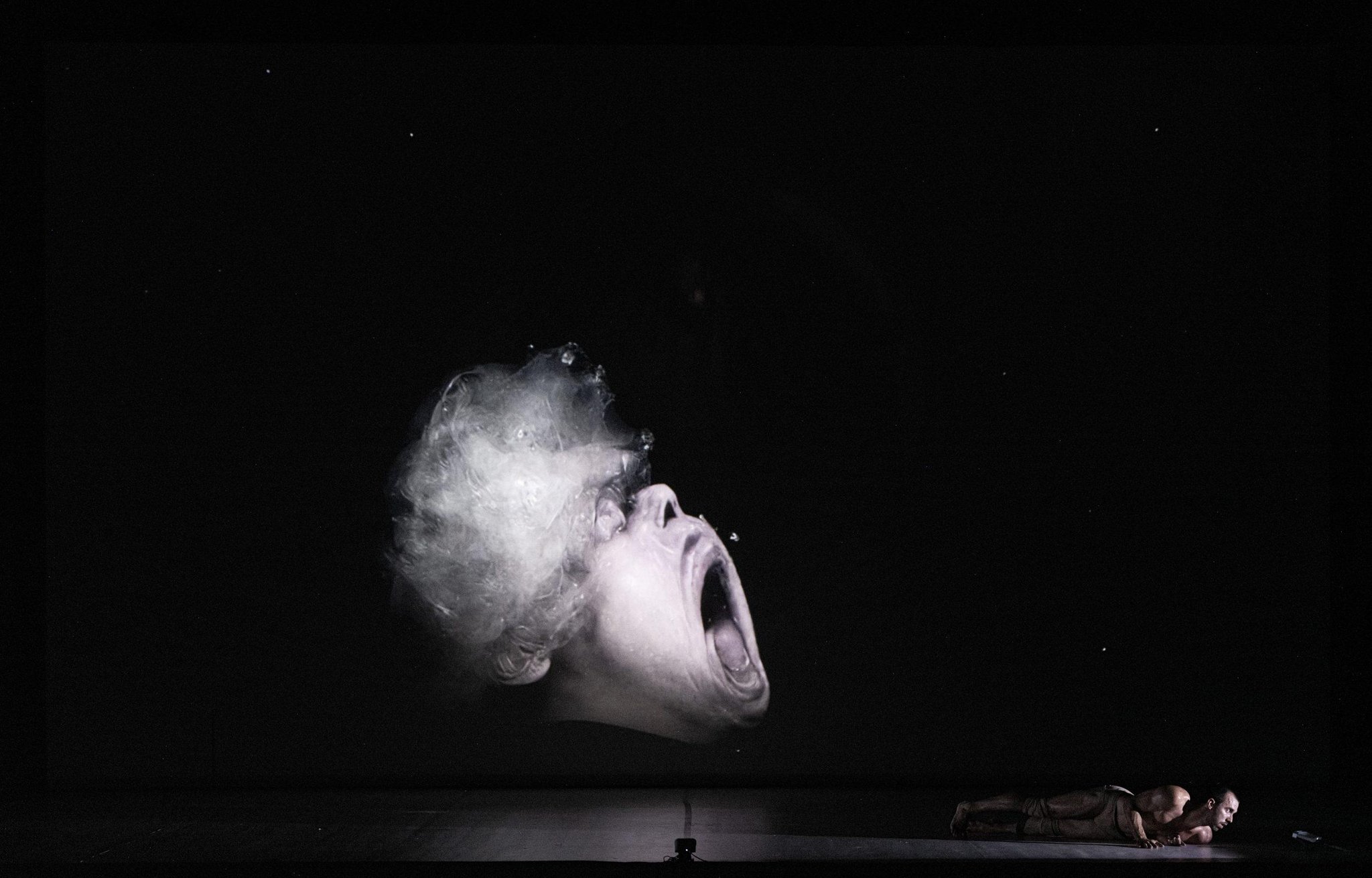
Teatro Asioli, 2024 | ph. Emmanuele Coltellacci
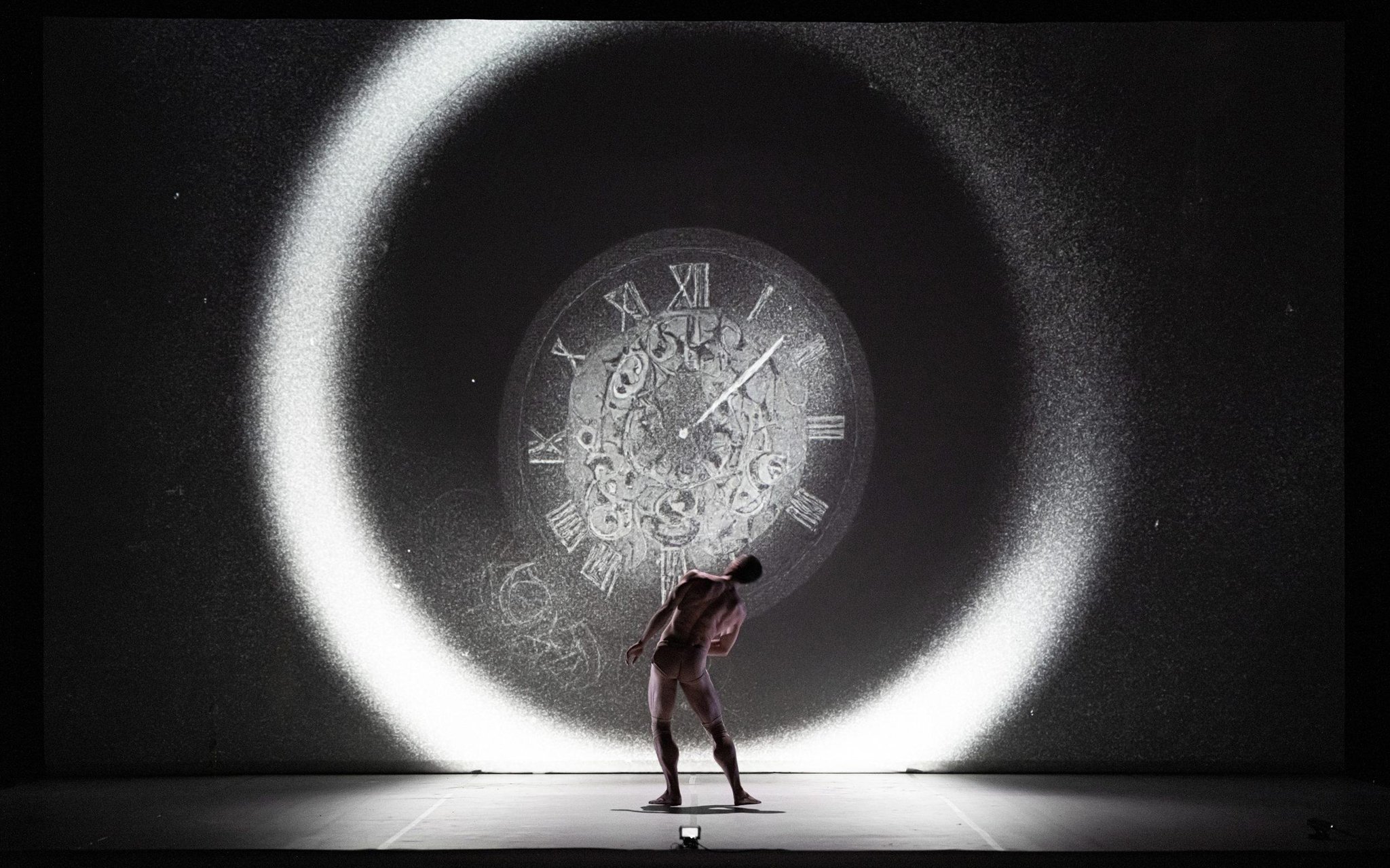
Teatro Asioli, 2024 | ph. Emmanuele Coltellacci
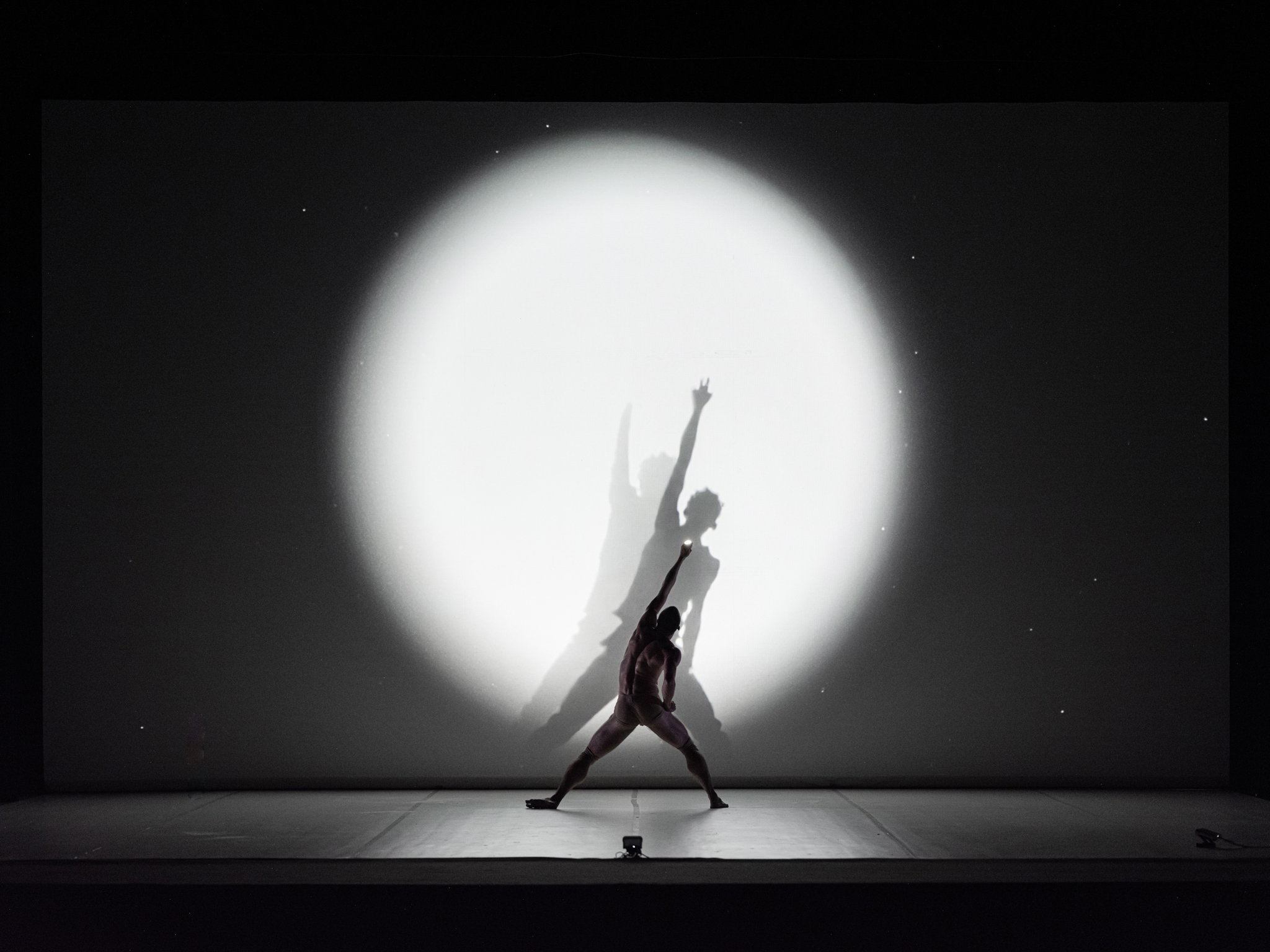
Teatro Asioli, 2024 | ph. Emmanuele Coltellacci
Onirica () is an artwork by fuse*
Direction: Mattia Carretti
Executive Production: Mattia Carretti, Luca Camellini
Choreography: Diego Tortelli
Performer: Hélias Salvador Dorvault
Music & Sound Design: Riccardo Bazzoni
Head of Visual Design: Matteo William Salsi
Software Development: Matteo William Salsi, Alessandro Mintrone, Matteo Amerena
Dream Selection: Alessandro Mintrone
Dream Voices: Matteo Amerena
Prompt Design: Alessandro Mintrone, Matteo William Salsi, Mattia Carretti, Matteo Amerena
Light Design: Stefano Cane, Matteo Amerena
Technical Direction: Matteo Amerena
Hardware Engineering: Matteo Amerena, Matteo William Salsi, Alessandro Mintrone
Communication and Copywriting: Virginia Bianchi
Production Assistants: Filippo Aldovini, Virginia Bianchi, Martina Reggiani
Studio & Event Management: Martina Reggiani
Booklet Graphic Design: Olimpia Zamò
Photo and Video Documentation: Matteo Torsani, Emmanuele Coltellacci
The visuals of Onirica 0 are based on a pipeline integrating the Diffusers: state-of-the-art diffusion model library developed by Huggingface and OpenGL Shading Language (GLL). The performance is powered by NOITOM's MOCAP Perception Neuron.
Special thanks: Alessandro Pelli and the staff of Teatro B. Asioli; Emilia Romagna Teatro and the staff of Teatro delle Passioni; Fabio Calvisi; Dr. Miranda Occhionero and Dr. Vincenzo Natale from the Laboratory of Psychophysiology of Sleep and Dream of the University of Bologna; G. William Domhoff from the University of California, Santa Cruz; Federica Patti; Multiplo; Fondazione Alberto Peruzzo; Peruzzo Grafiche; Epson Italia for the technical support.
Finally, we would like to thank the entire fuse* team who contributed to the realisation of this project by sharing knowledge, ideas and supporting the creation of this work in every way.